

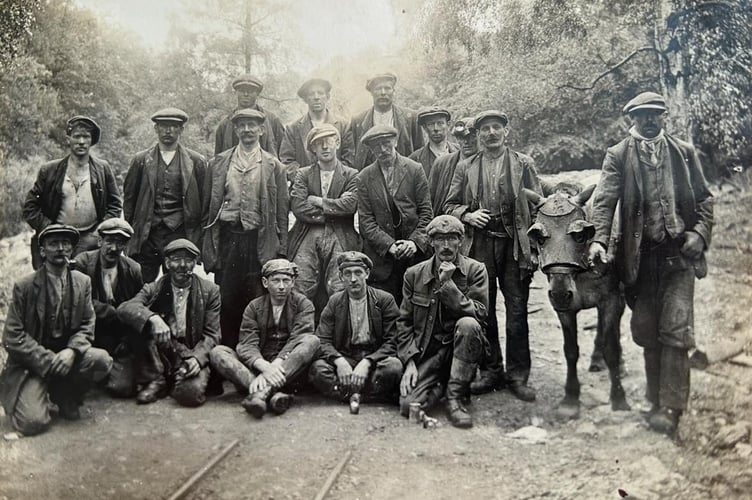
100 years ago the 1926 General Strike was about to end in the events have been argued over ever since. Nigel Costley, Editor of the New Regard, the journal of the Forest of Dean Local History Society describes what happened and why.
After a week of the stoppage both sides of the conflict were gaining support. More workers were joining the strike but even more volunteers were breaking it. Some workers feared their jobs would be lost if the strike didn’t end.
‘Not a penny off the pay, not a minute on the day’ was not just a slogan to rouse support, it seemed an absolutist position. Ernest Bevin’ leader of the big Transport and General Workers Union showed his effective leadership in running a strike he didn’t want, but by day five he declared: “Even the most ardent advocates of the general strike have usually reasoned on a few hours or days stoppage at the most.”


It was becoming clear to TUC General Secretary, Walter Citrine that it was hopeless to continue the strike if the miners were not prepared under any circumstances or conditions accept any reductions.
Citrine remarked: “The miners scarcely felt that they were really out until some months had elapsed”.
The nature of mining forced them to rely on each other as their lives depended upon it. Solidarity was built into the job – and not just at work. Miners in the Forest not only worked together but played sports, sang, played in bands, drank and built communities together.
But this culture also left them with a narrow view of the wider labour movement. Miners’ leader AJ Cook inspired members into action but did little to win friends amongst other unions. It was said that when he spoke to the General Council it was as if he was addressing a rally of hundreds.
Union leaders were angry at the way Cook tried to speak over their heads to stir their members. Even the left-wing dockers’ leader Ben Tillett complained about Cook “running down his own colleagues who might be as sincere.”
The bitterest exchanges were between Cook and rail workers’ leader, Jim Thomas MP who accused Cook of “childish outbursts”. Cook responded: “Thomas is giving vent to his personal spite because I have remained true to the cause of workers.“
The miners were conflicted (not for the first or last time) between giving authority to the TUC and the risk that this would lead to concessions they were not prepared to accept.
Problems were mounting for the TUC. Union rules had been ignored in the manner the strike was called. Funds were rapidly running out especially for those paying strike benefit – some faced bankruptcy.
After day three, no minutes were kept of the TUC meetings for fear of legal action. Speaking in Parliament, Sir John Simon warned that union leaders were “liable in damages to the utmost farthing of their personal properties.”
Despite acrimonious arguments, the consensus around the General Council was that the strike had to end. It is doubtful that there was a formal vote. Purcell joined the delegation to appeal to the miners’ leaders to accept the flimsy hope that the Government would accept proposals from Sir Herbert Samuel to maintain the subsidies during further talks and end the strike united. The miners refused.
TUC leaders met the Prime Minister to declare the strike over.
The General Strike ended in defeat and there was fury amongst activists around the country. Some employers refused to take strikers back or demanded changes to conditions or derecognition of the unions.
The union for Great Western Railway workers agreed to a humiliating statement of penitence and the removal of certain activists to other jobs. In Gloucester, one printing firm refused to take back the women bindery workers. The craft workers refused to return to work until everyone was reinstated.
Blame game
Ralph Anstis, writing about the Forest of Dean strike took a common-held line that the outcome was the result of cowardice by the “old men” of the General Council. He believed that they “lost their nerve”, “fearful of the Government’s charge that they were acting illegally.”
The final edition of the Gloucester Strike Bulletin on 13 May started with the headline
“End of Strike, nothing official yet. All out together, all in together.”
But in a later rushed-out edition:
“Strike still on, employers want you to crawl back on their conditions.”
As Forest MP and TUC General Council member, Alf Purcell had to face his good friend John Williams and the Forest of Dean miners. Williams described the end of the strike as a “shameful surrender to the government”.
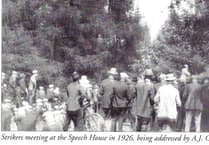
Some 500 miners crammed in to the Palace Cinema in Cinderford to hear Williams condemn the TUC General Council. Purcell asked that the press be kept out so he could speak in private. Another meeting was held the next day in Speech House where one journalist got in to report that Purcell had concentrated on the need to raise funds for the miners and spoke of donations from Russia.
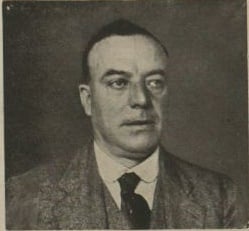
In the interests of unity, the meeting passed a resolution of confidence in Purcell who announced he was stepping back from Parliamentary duties to devote his energies to fundraising for Forest miners. He claimed that the General Strike had been a success. At the Annual Meeting of the Forest of Dean Labour Party at the end of June, Williams was re-elected as President. Purcell received a unanimous vote of confidence.
Purcell was on the platform at the Annual Meeting on 3 July 1926 alongside fellow General Council left-wingers George Hicks and Ben Tillett – all had been part of the decision to call off the General Strike.
Williams presented Purcell with a gift for all his support declaring Purcell: “A good comrade and friend to the miners. We have every confidence in him as our Member of Parliament and the outspoken champion of our rights and liberties.”
In July, the Westbury Board of Guardians voted to cut off miners’ families from Poor Law Relief, claiming that the men could return to work and they had received Russian money. This was devastating for the 3,794 people in the East Dean receiving Poor Relief. In response more than 100 women sought admission to the Westbury Workhouse and a demonstration of around 100 men, women and children was held in the village.
Purcell wrote to Neville Chamberlain, the Minister of Health, arguing that cutting off the relief was against his department’s guidelines and unlawful. A motion that Purcell be allowed to speak to the Board was refused on a vote 13 to ten.
On August 20, around 100 women with children occupied the workhouse for a night. The ministry for Health warned to Westbury Board that it must meet its legal duties but no action was taken.
The lack of relief was a key factor in forcing miners to go back into work in the Forest of Dean.
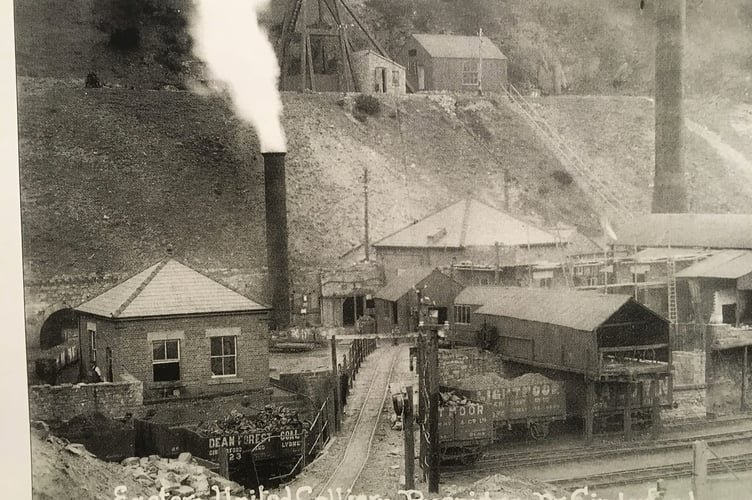
Purcell calculated that he had spoken to around 70 Forest meetings, often joining Williams to keep miners on strike. In August Purcell, Williams, Organ and a brass band headed a procession from Cinderford Town Hall to a public meeting in Ruspidge, aimed at stopping men returning to work at Eastern United and Lightmoor mines. Police lined the route as did a “considerable number” of onlookers.
Purcell was on the platform at Speech House on Sunday, September 26, alongside AJ Cook. Some 3,000 people heard Cook, speaking of “men going back to work in some places on an eight-hour day and stabbing our leaders in the back.”
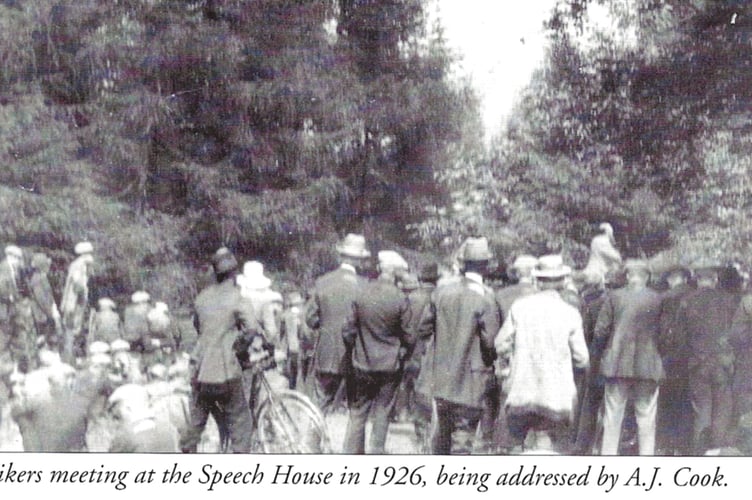
Greeted with cheers Cook paid tribute to the women who had “borne the burden of the fight” and he protested at the number of police officers present.
Cook’s visit did little to stem the growing tide of miners going back to work. By October some 4,000 had gone back in the Forest of Dean, part of 237,547 nationally. The strike continued until districts were told to open local negotiations to get what they could for a return to work.
On December 8, the Forest mine owners met Williams knowing that of the 6,500 men employed in April, 4,515 were already back in work. The employers insisted on an eight-hour day but conceded seven hours on a Saturday. On 12 December around 450 miners met at Speech House to hear of the terms on offer. 1,500 miners were excluded from the return to work including all but two of the FDMA Executive. They agreed to return to work.
Aftermath
The General Strike was the greatest act of solidarity ever seen in this country. Millions of workers struck in support of miners. But it was a defeat for the trade union movement. Cook’s spectacular speeches inspired audiences but left little room for manoeuvre and gave his enemies a bogeyman to rally against.
Cook endured great pain from a mining injury, aggravated when a protester kicked him during the strike. His leg had to be amputated. He also had a cancerous tumour in his neck and lung cancer, dying in London, on 2 November 1931 aged 47.
Unions were bowed but not broken. Some employers reached out for a more formal relationship with unions especially given pragmatic leaders such as Bevin and Citrine.
Forest miners’ agent John Williamsheld to his radical views and opposed the TUC talks with employers. He believed there was nothing to be gained from talking to the class enemy.
Despite Purcell’s role in the decision to call off the strike, Williams did not abandon his friendship and the two men continued to work closely together. A public split would not have helped the miners. But Purcell never recovered his reputation or standing within the labour movement. His failure to explain his stance, neither vindication or alibi, left him a broken figure politically.
The Government passed the Trade Union Act in 1927 to limit industrial action and force members to opt-in to contributing to the Labour Party. Union membership fell some ten per cent between 1925 and 1927 with the miners’ union losing more than a quarter.
The TUC held off commenting on the strike until the miners were back at work but the 1927 Congress gave vent to pent-up anger. The statement from the General Council still won the day. Citrine reflected on the conflict:
“The theory of the General Strike has never been thought out. The machinery of the trade unions was unfortunately not adapted to it. Their rules had to be broken for the executives to give power to the General Council to declare the strike.”
Forest miners still held Purcell in high regard. At the Annual Miners’ Demonstration in July 1927, Harold Craddock Vice-Chair of the FDMA said that Purcell was:
“one of the most courageous and honest fighters the working class movement of the world has ever yet produced.”
In 1929 Purcell declined to fight again in the Forest of Dean:
“Due to certain personal and domestic causes it has become necessary for me to change from the Forest of Dean to Manchester Moss Side”.
Purcell went on to lose. David Vaughan was elected as the Labour MP for the Forest.
No longer an MP, Purcell stood down as Parliamentary Secretary to NAFTA and the union had no role for him. He took up the position of Secretary for the Manchester and Salford Trades and Labour Council and returned to grass roots campaigning.
In Manchester he was remembered as the most influential and effective official. He not only represented unions but spoke up for tenants and local community groups.
The debate over the General Strike continues to this day. Every year outside the annual Congress of the TUC there are small groups demanding:
“TUC get off your knees, call a general strike”.
Comments
This article has no comments yet. Be the first to leave a comment.