
.png?width=752&height=500&crop=752:500)
I’m managing to cope with life without a mobile phone, although it is getting more and more difficult. You may think I’m anti-progress, or even anti-social, I jumped off the professional computer world just when mobile phones were becoming the fount of information, conversation and other communication.
Lyons corner shops in London in the 1950s were one of the first commercial computer users. I accidentally joined the commercial computer world in the 1960s, to work on a joint Home Office and Metropolitan Police system of processing traffic tickets. Foreign diplomatic could not be chased up for unpaid traffic tickets. We needed a Dip Priv (Diplomatic privilege) list, so that tickets issued to these overseas representatives would not be followed up by the law. I’m afraid that some of my colleagues unscrupulously added their own vehicles to the Dip Priv list, and had the whole of London as their free car park.
In the computer room there were huge magnetic tapes slowly revolving, huge magnetic discs in large white boxes like top loading washing machines, and punched card and paper tape reading machines, and this was the way in which computer programmers like myself would communicate with these primitive computing machines.
There was a strict hierarchy of computer workers (in those days when ‘computing’ was used instead of ‘information technology’ as the title of our work). There were the keyboard operators, producing punch cards and paper tape which would contain the computer programmers’ program as well as the data that the program would process (‘program’ is the correct spelling).
Then there were the computer operators, who would keep the computer running, feeding in the data and assembling the output, and ensuring error-free computer processes. Then there were the computer programmers such as myself, who would understand computer program linguistics, and using such computer languages as ‘COBOL’ or ‘PLAN’ or ‘FORTRAN’ to ensure that the computer would process the information on the paper tape or punch cards as the systems user intended. There was the systems analyst, who would discuss with the end user what the system was meant to do, and then advise the computer programmer how the information provided by the user should be processed.
I worked in the computer world for many years in England, Scotland and Wales, mainly on educational and other governmental systems. In Papua New Guinea, I worked on national information projects, where as well as producing information technology my job was to introduce computer workers and users to the frighteningly new world of ‘IT’. This also meant preparing local workers to take over from me to make foreign experts superfluous, in a process known as ‘localisation’.


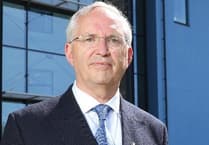
I have been out of the computer business (now known as ‘Information Technology’) for many years, and have not adapted well to the modern world of ‘apps’ and mobile phones, but I do manage to prepare and send out ’Forest View’ weekly on my underused home computer.
Comments
We've recently changed our login process. If you have an account for commenting, you will need to re-register on the login window.
This article has no comments yet. Be the first to leave a comment.