
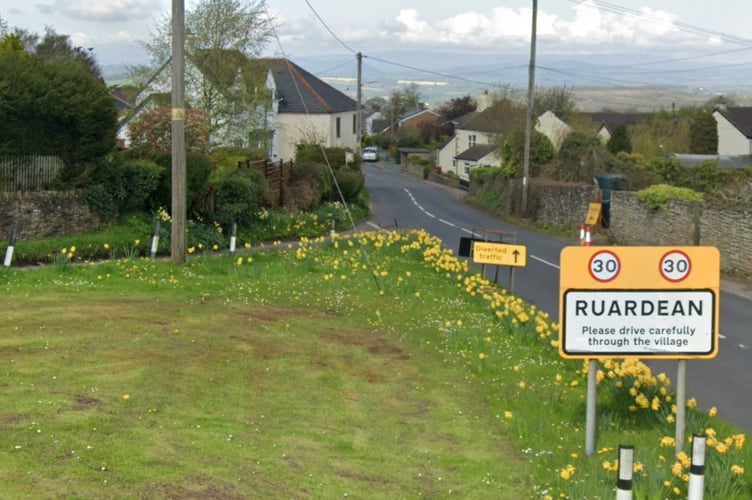
There is an interesting ingenious road sign in last week’s Forester advising motorists to beware that great feature from Ruardean history, the bear. It’s a shame that this episode has been commandeered by Drybrook, but the story is still worth repeating. The bear bones of this sad story are that a performing bear was assassinated by residents of Ruardean in 1889, who were suspicious of this unfamiliar large animal, and the village has not been allowed to forget this event since. It’s good to see that Ruardean residents are no longer embarrassed by their local animal, but can now celebrate it as a symbol of their town. But the sign should perhaps be a warning to bears to beware Ruardean. The bear has been more of a victim of Ruardean than Ruardean has been the victim of a bear. In spite of this cruel event, we can all sleep soundly, thanks to a cup of Horlicks developed by the Horlicks family who lived in Ruardean.
As well as a bear, the Forest can also offer another animal celebrity, Dick Whittington’s cat, which he took in a sort of shoulder bag on his reluctant long walk to London to become Lord Mayor. The cat and Dick Whittington have been heroes of countless pantomimes since. Perhaps their famous journey from Pauntley to London could also be commemorated here in the Forest.
The literary and social Forest links to animals can also be seen in the names of pubs in our area. There’s a White Hart at Broadoak, and an Ostrich at Newland. (The title of ‘Newland’ to the possibly most ancient village in the Forest has always seemed incongruous to me).
The Swans at Brierley and at Lydney are the last survivors of a wider flock of Swans which provided hospitality to the forest for many years. Then there’s Dog at Over, not quite in the Forest but familiar on your journeys to Gloucester. Please remember to pronounce Over to rhyme with hoover, not with Dover. There’s a Lamb at Mitcheldean.



The great children’s author Flora Klickmann of Brockweir wrote a ‘Picturebook of Animals’ among the great series of books on nature that she produced during her time at London and Brockweir.
In the world of mythology the goddess of the River Severn was Sabrina, half woman half fish, whose name was adopted most inappropriately by a minor entertainment starlet in the 1950s and 1960s.
A Robin, Robin Belcher, was comprehensively denounced and cursed by a sad prisoner in St Braivels Castle in the late middle ages. And perhaps the most popular animal based verse of all time was written by Will Harvey during his confinement in a German prisoner of war camp in the first world war. ‘Ducks’ was quirky, funny, showing that a sense of humour and a wonderful sense of poetic observation could survive during his internment.
Comments
This article has no comments yet. Be the first to leave a comment.