

In the first of a new ongoing monthly series, The Forest of Dean Local History Society and its contributors explore interesting areas of the Forest’s past.
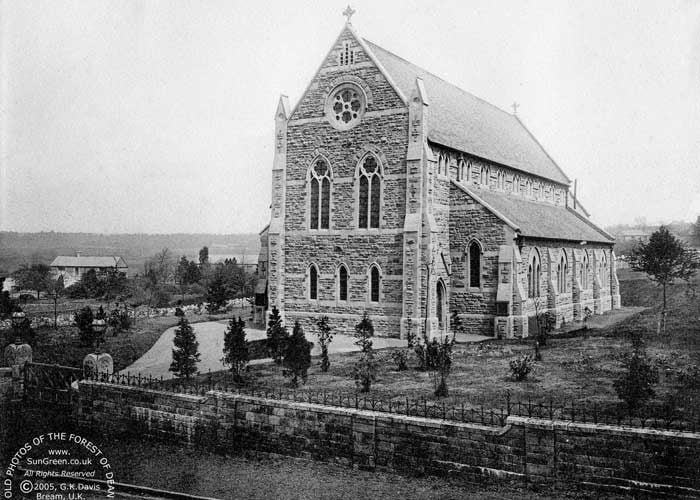
The latest edition explores Forest of Dean churches and chapels. The authors look at the number of churches in the Forest, why there are so many locally, who owns them, the politics surrounding churches, and a look ahead to the future.
You can get in contact with the Forest of Dean local history society by visiting its website or following the group via its social media platforms.
Avid history buffs can find out more about the Forest of Dean’s past by visiting areas of historical importance such as Dean Heritage Centre and Clearwell Caves. You can also find more information by using online resources from the local history society, and Forestry England.
.png?width=209&height=140&crop=209:145,smart&quality=75)

Enjoy the first edition of the series below.
The future for Forest churches and chapels
In the new issue of The New Regard, the journal of the Forest of Dean Local History Society, Simon Moore, Conservation Officer, considers the fortunes of our churches and chapels.
Traditional church attendance has been in long-term decline and with this comes the pressure to close the church buildings. They are no longer needed, too expensive to maintain or not deemed suitable any more. Many of the Forest of Dean’s nonconformist chapels have already been converted to other uses. Finding meaningful uses for our larger Anglican churches or significant town centre chapels is a challenge and not only one for those bodies left baby-sitting these structures but to the general population, who may no longer use them but still don’t want to see them left to rot, inappropriately altered or pulled down.
Why do we have so many churches?
After the Norman conquest and the establishment of Royal Forest of Dean, settlements were built on the periphery, each with a large church. Our oldest stock of buildings are the great medieval churches, built between the 12th and 14th centuries, of Tidenham, Hewelsfield, St Briavels, Newland, Staunton, English Bicknor, Ruardean, Mitcheldean, Abenhall, Littledean, Newnham, Awre, Lydney, Aylburton, Alvington, Westbury and Woolaston. They acted as beacons in the landscape to draw people to the settlements for trade, security and hospitality. They reminded the population of the glory of God and assisted the souls of the dead benefactors through purgatory. They made money to keep the great machine of the medieval church going and growing.
Churches were extended with new chapels, windows, and memorials, while dealing with the plague, wars, religious persecutions and the Reformation – but they survived. As part of the new Church of England, buildings were stripped of their ornaments, their stained glass windows and had their wall paintings whitewashed over.
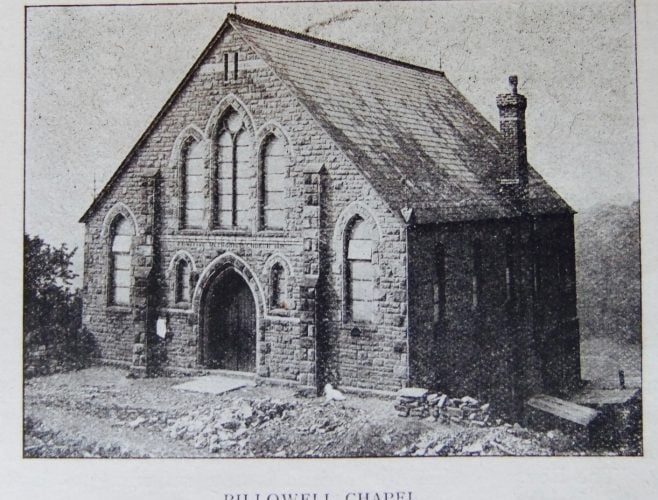
The Civil War brought new ideas and radical beliefs. There were a few Quaker meeting houses in the Forest for example. Nonconformists soon outgrew meeting in people’s parlours so they built small meeting houses. They sang songs and added Sunday schools. As they attracted more followers they needed larger buildings.
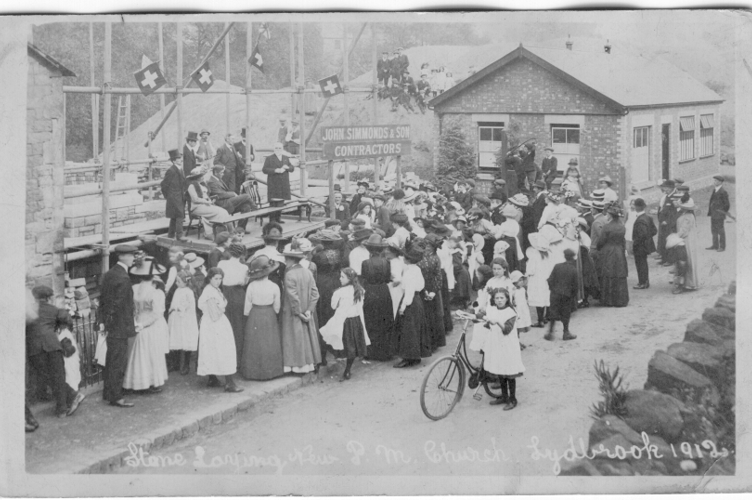
As is often the case with radicals, they fell out with each other on a regular basis and subdivided into a number of alternative and competing denominations, each building their own chapels. Baptists, Wesleyans, Methodists, Primitive Methodists, Independents, Bible Christians, Congregationalists all built their own chapels between 1798 (Ruardean Congregational Chapel) and 1912 (Lydbrook Primitive Methodist Church). Within the Forest there were at least 42 nonconformist chapels.
Some denominations merged, or reunited, such as the Primitive and Wesleyan Methodists. Some simply disappeared leaving empty chapels to be converted to houses; only about eight of these remain as places of worship.
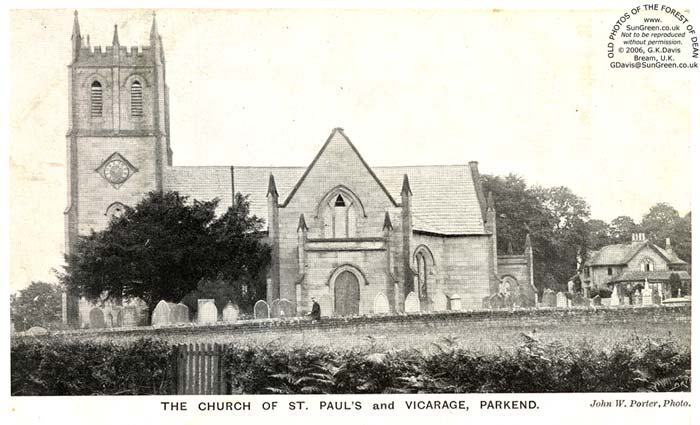
The chapel movement presented a challenge to the established church. In the Forest of Dean pioneering clergy were working with the Crown to build new churches to serve the population that were starting to encroach on the old Forest bounds. The first of these was Christchurch (1812-16) followed by Holy Trinity, Drybrook (1816-17). Revd Henry Poole arrived with a missionary zeal. He designed and built the radical octagonal church of Coleford St John’s (1820) and a similar model at Parkend St Paul’s (1821-2), re-fronted Christchurch (1822) and designed a new church for Bream St James (1823). Most of these were constructed with school rooms, for educating the local children, something the nonconformists were also doing! Blakeney All Saints (1819-20) also falls into this category.
The next batch of Forest churches and the numerous rebuildings and ‘restoration’ projects were heavily influenced by the ‘Oxford Movement’; these include: Bream St James (rebuilt 1860-61), Cinderford St John’s (1843), Cinderford St Stephen’s (1888), Clearwell St Peter (1863-64), Coleford St John’s new church (1878), Lydbrook Holy Jesus (1850); rebuilt St Peter Newnham (1881), Tidenham Chase St Michael (1888), Tutshill St Luke (1853) and Viney Hill All Saints (1865-67). The Oxford Movement brought a touch of theatre to services, robed choirs, organ music – and borrowing songs from the Wesleyans!
A few new smaller churches were constructed in the inter-war years, mainly formalisation of earlier tin mission churches and small chapels of ease, like St Luke’s, Milkwall (1935); the Good Shepherd, Broadwell (1938); Holy Trinity, Primrose Hill, Lydney (1933) and United Reformed Church, Lydney (1928).
The Roman Catholic Church reappeared in the main Forest towns: St Joseph’s Lydney (1977), St Margaret Mary, Coleford (1933) and Our Lady of Victories, Cinderford (1939) all still open for worship although served by a single priest.
Few Forest of Dean Anglican churches have closed, St Luke’s Milkwall is now a house. St Michael’s in Soudley is used as a holiday cottage as is the former chapel at Elwood. But they face an uncertain future. The large St John’s in Coleford is closed pending consent to convert it to flats. Many are only open for one service a month and some are in early consultations over their future viability. Unless we take notice and help to maintain our church buildings we will see more become vulnerable to closure.
Who owns our church buildings?
The church members ultimately make the decision to close, often after years of struggle and consultation. The Church of England website says that it deals with 20-25 church closures a year; not huge numbers but many remain empty a long time after the doors have closed for worship.
Our places of worship were purpose-built for large groups of people to worship in a particular way. Such communal places are in decline (look at the fate of public houses, dance halls and cinemas). Many do not readily convert into residential accommodation (and if they do have large ongoing maintenance bills to fund). Few local authorities have funds for new art galleries or museums. We face the potential of large empty buildings, boarded up and left to decay, like the great country houses of the 19th century, many of which were simply pulled down.
Grave matters
A consecrated Church of England churchyard remains consecrated even after the church closes. Graves are almost never moved and the land remains a protected burial ground even if the church building is sold or redeveloped. The Disused Burial Grounds Act 1884 prevents building on the site, though this can sometimes be overridden under strict conditions. The primary responsibility for the upkeep and safety of individual gravestones and memorials remains with the family of the deceased. The local authority assumes responsibility for maintenance if the family cannot be traced or fails to do so.
The public generally retains the right of access to the burial ground, regardless of what happens to the church building.
The emotions of sacred spaces
Churches and chapels hold deep emotional and spiritual meaning for local communities. Even if a church or chapel has been unused for regular services for years, it may still serve as a focal point for weddings, funerals or festivals. Attempts to convert or sell these buildings can trigger strong opposition from residents who view them not just as structures, but as repositories of memory and identity. Rural churches and chapels, though often small in scale, represent some of the most enduring and culturally rich elements of our landscape.
Local tensions can complicate efforts to repurpose buildings. Proposals for residential use of St John’s in Coleford has faced robust opposition from the neighbourhood over potential parking problems and concerns from conservationists over the scale and nature of the alterations.
The diminished congregation of Lydney Baptist Church failed to gain approval for their restructuring plans for the building and it now stands forlorn on the High Street. The Clearwell Mortuary Chapel remains at risk.
Lack of funding and political will
Conservation is not cheap. Maintaining an unused church can cost thousands annually in basic upkeep. Each church has its own challenges: Redbrook Church suffers badly from stone erosion and is imaginatively attracting trainee masons to repair it. Staunton Church has damp penetration, Flaxley has issues with its roof tiles and Clearwell has no heating. Many of our remaining churches are listed buildings (often Grade One). They may be the only medieval building surviving intact within a village or town.
In some urban areas, congregations have been boosted as a result of immigration. The Catholic church witnessed an uptake in attendances due to the arrival of Polish workers in the early 2000s. Communities from Eastern Europe, Asia and Africa can be more devout in their Christian faith. But this trend has made little impact in the Forest of Dean where immigration has been very low.
Planners, often working with tight budgets and few staff, may be forced to make hard choices: preserve a rural church with little practical use, or focus funds on infrastructure, housing or schools. This leads to a quiet attrition, where churches and chapels are left to decay until they pose safety risks – and demolition becomes the only viable option.
Creative solutions
Some churches have established ‘friends groups’ such as Longhope, Flaxley and Newland and diversified by opening up their space for community uses. Coleford Baptist Church is a thriving example. Partnerships between churches, local authorities, social enterprises and charities are proving vital in exploring creative and context-sensitive reuse.
Churches such as Christchurch have been 'reordered' adding additional facilities and changing the internal layout to suit different uses. Scaling these successes remains difficult. Each church presents a unique puzzle, with its own mix of architecture, community sentiment and geographic isolation.
Cinderford Town Council recently acquired the large Wesley Chapel for community use, enabling the Methodist congregation to hire it for their services.
Looking Ahead
The question of what to do with our redundant churches and chapels forces society to confront larger issues: What do we value in our built heritage? Who decides the fate of sacred space once its original purpose fades? And how do we balance historical conservation with present-day needs?
For planners and conservationists, the path forward is neither clear nor easy. We have more church buildings than numbers of worshippers can now justify. There is no state funding available to keep them in basic good repair or open. Unless something dramatic happens to renew the fortunes of the Church of England then we will have to look at what we want to keep open and what we need to close.
A church’s overall mission is theological, about spreading the word, offering charity and support and pastoral care. It is not about the conservation of buildings. If we wish to keep them in our landscape, it is for us, the ‘people’, to conserve, maintain and cherish these buildings.
These are uncertain times but one thing is certain: if we fail to act thoughtfully, we risk losing not just buildings, but the stories, identities, and connections they embody.
The full version of this article along with a directory of churches and chapels is in The New Regard at certain outlets or order online.
Comments
We've recently changed our login process. If you have an account for commenting, you will need to re-register on the login window.
This article has no comments yet. Be the first to leave a comment.