
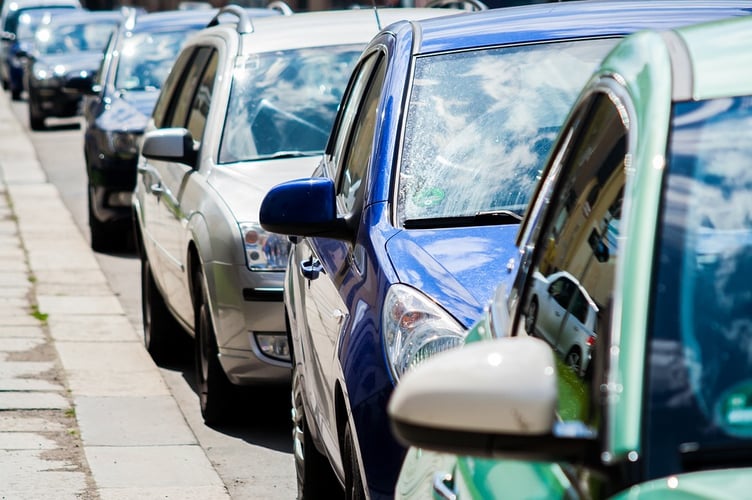
This is a story about driving in the Forest, and the informal communication processes that drivers use to make driving through the Forest a ‘joy’ rather than a hazardous experience.
There is an unwritten system of communication between drivers approaching vehicles travelling in the opposite direction. You are driving along a road only wide enough for two vehicles – there are cars parked on one side, and therefore now the road is a single lane. It could be an impasse, but the unwritten rule of flashing lights comes into operation. If the cars are parked on your side of the road, then vehicles approaching from the opposite direction have priority.
But what if the vehicle approaching from the opposite direction has not quite reached the blocking parked vehicles? Might you be able to get through without any inconvenient slow down for the approaching motorist? Is there a vehicle behind you driven by someone not as public spirited as you are and is clearly out to bridge that gap in his or her belief that you will be as aggressive as they are and force a way through? Are there any side streets that might be around, disgorging vehicles driven by impatient drivers? If you concede advantage to an approaching vehicle, will you have time to stop before hitting the vehicles inconsiderately parked on your side of the road? You have a fraction of a second to consider all these possible scenarios before you can decide stay or go.
In London, where I drove for many years, it was simple. Winner or loser. The slightest indication of weakness, consideration or caution, and your approaching counterpart driver would blast his or her way through, waving with a traditional gesture of contempt, while you screeched to a halt hoping not to do too much damage to the cars parked on your side of the road.



So it was with some relief some years later, that I learned to enjoy the warm feelings of camaraderie that characterises forest drivers. ‘After you’ or ‘No, after you’, ts the unspoken dialogue that characterises these potential confrontations in the forest. Flashing lights, waves, beckoning gestures, and most of all careful and considerate driving make driving a pleasure rather than a competition, and brings as much joy to the driver who concedes precedence at a potential hazard as to the motorist who has the priority.
The process is that you will identify potential bottleneck; watch out for traffic approaching from the other direction and perform a quick mathematical exercise based on your speed, the approaching vehicle’s speed, distance on either side from the obstructions, taking into account weather conditions. You will then flash your lights a couple of times to indicate that you are conceding priority, and then the other driver will acknowledge your concession of priority by flashing back, with a little wave of thanks as he or she passes by.
Simple thing like this make Forest driving a great pleasure.
Comments
This article has no comments yet. Be the first to leave a comment.