
THERE are some things that happen which we often overlook or simply do not notice.
Last week, a resident posed a question to a community group asking why the Forest of Dean is no longer known as “The Royal Forest of Dean”.
There seemed to be a number of theories from community members, some of which were shared, whereas others differed wildly.
So I decided to look into this further. I spoke with The Forest of Dean Local History Society to learn more about the backstory of “The Royal” Forest of Dean.



It’s best to begin with what exactly a Royal Forest is. Chris Sullivan from the Forest of Dean Local History Society explained that the Anglo-Saxons had the idea of Royal Forests, but it was the Normans who expanded them across much of England.
The only Norman Royal Forest in Gloucestershire was the Forest of Dean. Other areas around Bristol like Kingswood were chases rather than true Forests.
During this era, 'Forest' did not refer to a thickly-wooded area for growing trees. It actually meant an area reserved for Royal hunting and catching game for the Royal larder.
All Forests belonged to the King, so all were 'Royal', but didn't need to be called 'Royal Forests' because there weren't any other sort. It’s difficult to pinpoint when this began, but Chris found evidence from as early as 1148.
This game reserve had a special legal system known as 'Forest Law' to protect the animals and their food.
There was an inner area known as the demesne land, where no-one was supposed to live, and an outer area where people could live, while still being bound under Forest Law.
Royal Forests were quite unpopular. As well as severe punishments for poaching, you would get fined for taking wood, for ploughing up woodland and building cottages.
Forest Law was enforced by local Verderers which was like a Magistrates Court for lesser offences, while the more serious offences went to a Forest Eyre, similar to a Crown Court.
This type of feudal hunting culture didn't fit well with the Dean for a number of reasons, including being a very old iron-producing centre, or later as a source of Navy Timber.
The number of Forests dropped over the centuries, for example through the big privatisations under Charles 1, until the Forest of Dean and the New Forest were the only ones left standing.
Pre-1971, both were still loosely under Forest Law, so were still Royal Forests. Chris suspects that keeping the “Royal” part of the name may have added some tourist appeal and status.
In July 1971, the Wild Creatures and Forest Laws Act was passed. This abolished the Crown's right to 'any franchises of forest, free chase, park or free warren'. The Act stated: 'The Forest law is hereby abrogated, except in so far as it relates to the appointment and functions of verderers'.
This ended Royal Forests in an official capacity. Although the Forest of Dean, the New Forest, and Epping Forest can still elect Verderers in an advisory, but not a punitive capacity.
Some organisations, clubs and events continue to use Royal in their name. The Royal Forest of Dean Inner Wheel is one example.
I asked the local club why they continue to use Royal in their name.
A spokesperson told me: “When you look around our beautiful area today, you will notice that a lot of modern businesses and groups have removed the word "Royal" from their names.
This mostly goes back to the 1920s, when the Crown handed over the management of our ancient woodlands to the Forestry Commission. People often ask us: why has our Inner Wheel club kept the word ‘Royal’. For us, it comes down to a mix of local pride, continuity, and a deep respect for our roots.
“The link to Rotary has been at the heart of our club since the very beginning, and it is still just as strong today. When the local men’s Rotary club was set up back in 1958, they officially chose the traditional name: the Rotary Club of the Royal Forest of Dean.
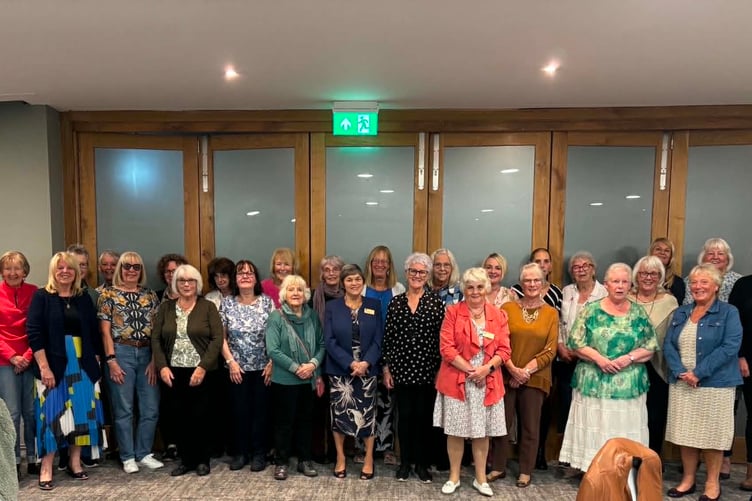
“Decades later in 1993, when our incredible female founders officially started our Inner Wheel branch, they chose to use the exact same title to keep that strong partnership alive, and honour our area's unique history. Because we have used the name continuously since then, we are legally allowed to keep it—and we wouldn't have it any other way!
“Ultimately, keeping "Royal" in our title shows our ongoing allegiance to our club's history and the choices made by our founders. We are incredibly proud to carry the full title they handed down to us, and we look forward to using it for many more years, as we support and serve our wonderful local community.”
Comments
This article has no comments yet. Be the first to leave a comment.