
In 1863, Rev William Hiley Bathurst (1796-1877) inherited Lydney Park when his elder brother died without children.
In 1871 he lived with his daughter Eleanor, 37, and son Charles 34, with his wife, Mary, and their four children – William aged six, Mary four, Charles three and Margaret two.
To serve this family were 16 servants including governess, nurse, housekeeper, two lady’s maids and maids for the upper and under house, laundry, kitchen and scullery.
In nearby estate houses lived estate agent, Albert Harrison, and Thomas Smith, gardener, with his wife and children. In another unit were the butler, Samuel Varden, and his family. At Redhill House lived Peter Kiddy, the farm bailiff, with his wife and four children.
By 1881 Rev William’s son Charles, now head of the household, lived in The Park New House with his wife Mary. There was a governess from London, a nurse from Scotland, a lady’s maid from Denbighshire, a cook, Elizabeth Dart aged 65 from Awliscombe in Devon, four more maids, a footman and a page, John Algernon Gamble, from Coleford.
The farm bailiff Henry Toogood also from Awliscombe, was probably related to the cook, was in Old Park House along with Richard Stephens, the curate of Lydney with Aylburton and his sister and servant. Also are listed William Hickman, coachman, and his wife, Elizabeth who was the laundress.
Charles Bathurst’s eldest son, William, died of meningitis in 1883 aged 18, and his wife died in 1885 aged 43.
In the Stables were coachman, John Billingham, born in Westbury, and a groom, James Edwards, from Monmouthshire. In the 1891 ledger Billingham’s pay was 51s 5d for a fortnight.
By the turn of the century, widower Charles Bathurst was living with his daughter, his son Charles and his wife, Bertha nee Lopes, and two grandchildren – one-year-old Benjamin and three months T old Ursula.
In charge of the servants was the butler Samuel Varden. There was housekeeper, Harriet Turford from Tenbury Wells, four maids and two footmen. The children were looked after by nurses Edith Gibbons, 26, from Middlesex and Daisy Ledbetter, 15, from Lydney.

James Lauder from Northamptonshire was agent and steward of the Estate. He and his wife Frances had two children, a general servant, Sarah Potter from Bream, and a nurse, Ethel Hursey, from Lydbrook.
Lauder was agent to the Bathurst family for 47 years, living in Old Park with his wife and six children all born in Lydney and their servant, Bessie Ellis from Aylburton.
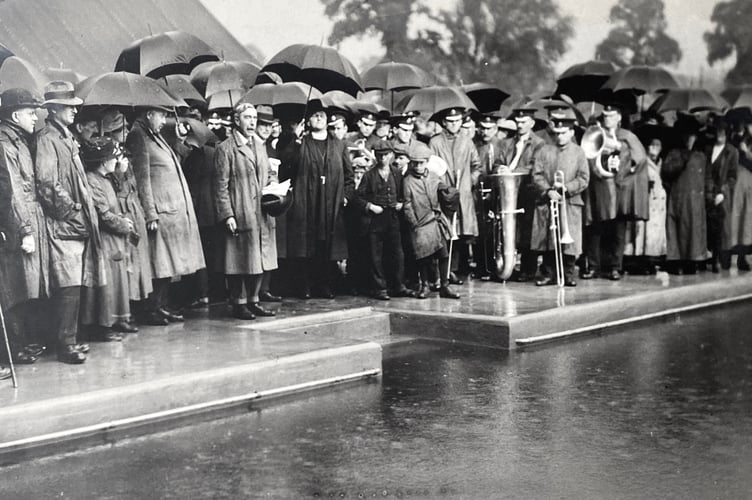
The estate workers helped raise funds for the Lydney and District Cottage Hospital. At the ‘annual tea’ and jumble sale the Lydney Prize Male Voice Choir sang and the Lydney Brass Band played.
During the First World War Charles Bathurst became a junior Minister in the Ministry of Food and by 1921 aged 53 he is a barrister and agriculturist. His wife Bertha, 50, is self-employed in farming.
There were still plenty of staff in the house. Elizabeth Thorndyke, was Lady Bledisloe’s maid. Butler, Sidney Murdy had probably replaced Mr Varden. Alfred Cornby was a footman and William Duffin, only 14, was a ‘topboy’, a junior footman. There were seven other servants.
Living in other estate houses are coachman Frederick Hatter and his wife; two laundresses, Elizabeth Butler and Gertrude Deakin; gardener Ernest Bailey, his wife and two children; gamekeeper Herbert Potter with wife Maud and four children.
In May 1926 Lady Bledisloe died. The affection felt for her by the Lydney Park staff was shown at the funeral in Lydney Parish Church.
In 1928 Lord Bledisloe remarried to the widow Hon Alina KE Jenkins, known as Elaine, daughter of Sir John Jones Jenkins, 1st Baron of Glantawe. It was also in this year that Lord Bledisloe obtained Mortimer and Tessa Wheeler to undertake a further excavation of the Roman Temple site.
In June 1933 son Benjamin, who would become the 2nd Viscount, married Joan Krishaber in St Margaret’s Church, Westminster. The reception was held at Claridge’s and among the 400 guests were many from Lydney. Lydney Parish Church bells rang during the day.
Among the presents were a pair of silver salvers from the Lydney Park Estate employees, a silver salver from the tenants of Lydney and Aylburton, a silver fruit dish and silver hot water jug from the inhabitants of Lydney and Aylburton and a pair of silver sugar sifters from Lydney Cricket Club.
In 1936, after Lord Bledisloe, now a Viscount, had returned from his five years as Governor-General of New Zealand, the estate was run by Bledisloe Estates (Glos.) Company. James Lauder was appointed manager with a salary of £600 per annum but he died later that year.
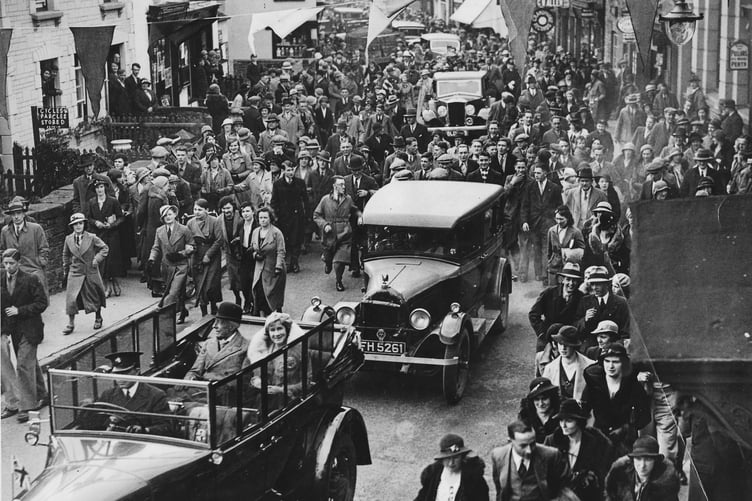
The estate’s pig farm and cheese factory was featured in a Country Life article of August 1924. It highlighted how Lord Bledisloe was an agricultural innovator, producing and selling quality meat products direct to local people.
Using milk from the estate’s cows, the high-quality cheese was often given as gifts to illustrious visitors and contacts. The Queen obviously enjoyed both her visit and the cheese.
Colin Newman worked as a dairyman for many years, looking after about 200 cows on the farm. In 1996 he also took over the herd at Park Farm. Colin remembers that Christopher Bathurst, 3rd Viscount Bledisloe, took a very great interest in the farm. After a lengthy discussion or disagreement Mr C might look at his watch and say “That’s enough. Think we’ll do it my way.”
Colin lived in an estate property with additional benefits of free milk and logs and most bills included. His wife maintained the administrative records of the dairy concerns. In the adjacent office worked Sally James did the wages and her daughter Tracy amongst others.
Colin was sometimes involved in the regular shoots held by the game keeper, Simon Lester, who lived in Quarry Lodge in the 1990s. Overall he described it as “a lovely way of life if you had the right mindset.” He felt well paid and well looked after.
Market gardening
What we now know as Coinros Nurseries, including all the greenhouses, was once Lydney Park’s market garden department. Its produce went to wholesale markets in Bristol and Cardiff as well as to local customers.
Avril Nixon and her sister Susan Martin grew up on the estate. Their father, John King, was in charge of the market garden for many years and they lived in The Bothy, an estate house, with their mother, Renee. John had worked at Lydney Park for a short time before the war but then joined the RAF and was sent to the Far East.
Later he worked on experimental horticulture at Reading University. On the death of the previous head gardener, Mr Bayliss, John returned to Lydney Park to take charge of the market gardening branch in 1959, a role he held until 1986.
He built up the business, which included lettuce, tomatoes, strawberries, runner beans as well as chrysanthemums and dahlias. Blackcurrants to make Ribena were grown on rougher spots and picked by hand.
Working with Reading University, the department undertook trials of chrysanthemum growing. The flowers were packed in large cardboard boxes and held in place by cardboard and paper spools to keep them perfect.
They went on trains to Leeds and Sheffield. The daughters were paid to roll and produce these spools in their spare time. Mr King propagated the dahlia stock by cuttings.
Avril and Susan, as children, played in the deer park and the old pleasure grounds that had been the gardens of the previous Lydney Park mansion.
They walked a mile to the primary school in Lydney and later the grammar school. Avril has fond memories of the annual children’s Christmas party held every Christmas Eve for the children of workers on the estate, followed by carol singing around the Christmas tree.
M&S began buying their tomatoes but only wanted the very best. This made the rest less saleable so decreased profits. It became harder to compete with larger concerns and the market gardens closed in 1984. Later it evolved into Coinros.
On John King’s retirement in 1986 a large party was held and he was presented with a number of presents such as a wooden seat and large impressive flower pots. Lord Bledisloe made building land in Aylburton available at a nominal price which was a considerable help to the family.
1,000 acres of managed woodland had 40% hardwood and 60% conifer. Brian Reece’s father was head forester at Lydney Park. There were seven people working on forestry, with only one chain saw, the rest of the work was done with axes. A lot of the timber went for pit props.
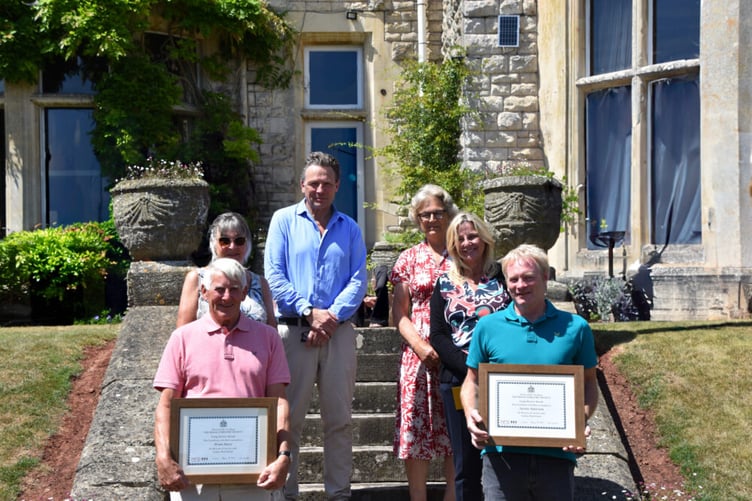
Brian’s family lived in Cross Farm house, went to school in Aylburton, then Lydney. He has fond memories of the annual children’s Christmas parties which included tug of war in the dining room with Bathurst family members. Hunting hidden broad beans for a prize was also popular.
Brian also enjoyed the annual harvest suppers for estate workers and the Christmas carol singing with good punch provided!
In 1968 Brian went on a six-week course to Penrith Forestry School. He became head forester in 1971 aged 21 and worked at Lydney Park until his retirement.
Brian helped clear the ground of trees in the area which became the Spring Gardens. He moved large rocks from the deer park which were used to make the ponds in the gardens.
Brian remembers the 2nd Viscount and his wife, Benjamin and Joan. He remembers Ben playing the piano and smoking a cigar. Joan could not bear mess or untidiness. Brian remembers her going around the estate followed by her little dogs.
Diane, who worked for the family in London as a nanny came down to Lydney Park at weekends for shooting. Brian was helping with beating and moving people around with his tractor when he met Diane who he went on to marry.
When Mr Christopher died, Brian was one of the six pall-bearers, all estate workers, who carried the coffin into Cinderford crematorium. Another pall-bearer was Gethin Evans part of the forestry team for 40 years. His wife’s mother and father both worked on the estate.
Her mother was the housekeeper for many years. And in turn, her daughter worked there. Gethin’s granddaughter has helped out at open days. Four generations of the family have worked at Lydney Park.
Gethin drove the tractor and trailers that cleared up the huge trees as they were cut down. Every year a Christmas tree was erected in front of Lydney Town Hall. The estate still sells hundreds of Christmas trees every year.
Andrew Bruce was a gardener on the estate for a few years around the turn of the last century. He was sometimes asked to prepare the big house on a Friday before Mr C arrived for the weekend, such as laying and fetching logs or ensuring the heating system was operative.
Liz Day worked in the estate offices for over 25 years, starting under manager Beryl Butcher. Liz looked after the finances of all the different departments within the estate – forestry, farm, dairy, market gardens, maintenance etc.
The 3rd Viscount, Mr Christopher, was in charge through Liz’s time. She said he believed it was important to note and reward loyalty and that he would always make time to help if there was a problem. When she retired, Mr Christopher made a lovely speech and she was presented with silver earrings and necklace.
Liz is still involved with the Bledisloe New Zealand Trust set up by the 1st Viscount to maintain links with the country after his years as Governor-General. It helps local people who wish to travel to or get educated in New Zealand.
Liz’s mother Elizabeth Wolridge, also worked on the estate and wrote a book of her life, Swinging into the 90s, when she was in her 90s.
The story of the estate workforce is one involving whole families who lived and worked on the estate and sometimes inter-married. Long-term workers with estate houses had suitable perks, such as annual wellington boots for the gamekeeper, a brace of pheasants, logs and a Christmas tree in December for all.
Much-loved events for estate workers included the harvest time supper, the Christmas Eve party for children, carols around the Christmas tree with the Lydney Town Band.
After researching for this article, Mary was delighted to join the team around the tree last Christmas.
Read the full article in the New Regard Lydney Park Special at local outlets or via the Forest of Dean Local History Society website.
Comments
We've recently changed our login process. If you have an account for commenting, you will need to re-register on the login window.
This article has no comments yet. Be the first to leave a comment.