
WHEN Disney+ brings Rupert Campbell-Black and Taggie O’Hara back to television screens in November, viewers will once again encounter one of British fiction’s most famous couples.
For readers in the Forest of Dean, however, there is another reason to revisit Dame Jilly Cooper’s beloved Rutshire Chronicles, with her final completed novel offering a distinctly Gloucestershire connection.
Published in 2023, Tackle! swapped horse racing for football, centring on fictional Searston Rovers and a wooded rural landscape that may feel familiar to anyone who knows the Forest.
The renewed attention surrounding Disney+ drama Rivals, alongside the first anniversary of Cooper’s death in October 2025, provides an opportunity to explore the places and personalities behind her final Rutshire story.
Tackle! was the eleventh novel in the Chronicles and the first to place football at the heart of the action. While racing, television and politics had defined many earlier instalments, Cooper now explored life inside a struggling football club.
There were ambitious owners, colourful personalities, dressing room rivalries and the relentless pressure to win, all delivered with the humour and romantic complications familiar to generations of her readers.
At the centre was Rupert Campbell-Black, among the most recognisable characters in British popular fiction. Readers first met him in Riders in 1985, when he appeared as a charismatic but deeply flawed aristocrat and notorious womaniser.
Over the following decades, however, Rupert changed considerably. His marriage to Taggie O’Hara revealed a more vulnerable side to a character once defined by arrogance, wealth and an appetite for trouble.
By the beginning of Tackle!, he was devoted to Taggie, whose breast cancer diagnosis formed the emotional heart of the novel. Their relationship provided a moving contrast with the chaos surrounding Searston Rovers.
Rupert unexpectedly became the club’s chairman after daughter Bianca persuaded him that the move could help bring her and her footballer husband, Feral Jackson, back to Gloucestershire.


He consequently found himself navigating an unfamiliar world of professional football while trying to support Taggie through her illness, a combination that gave the story both comic energy and genuine emotional weight.
Although the game provided its setting, Tackle! was ultimately concerned with loyalty, family and growing older together. The novel offered a different perspective on a couple whose romance had unfolded across much of Cooper’s career.
For Forest of Dean readers, though, the setting provides an additional attraction. Searston Rovers play at Deep Woods, a stadium associated with trees, hills and rural countryside rather than the crowded streets surrounding many professional grounds.
Such descriptions can easily bring to mind the Forest’s wooded valleys, scattered settlements and sporting communities, where football clubs have long formed an important part of local life.
The comparison is an evocative one, although it should not be mistaken for proof that Cooper modelled Searston on a particular Forest of Dean town or football ground.
Indeed, Cooper researched the sport through contact with Forest Green Rovers, whose home in Nailsworth is elsewhere in Gloucestershire. That documented connection offers a more direct explanation for some of the fictional club’s inspiration.
Nevertheless, the surrounding scenery described in Tackle! resonates beyond Nailsworth. Readers familiar with the Dean may recognise the sense of woodland enclosing a community and the importance of local loyalties in a rural sporting setting.
It is this atmosphere, rather than an identifiable stadium or village, that gives the Forest comparison its appeal. Fictional geography allows different readers to see their own countryside reflected in a story.
There is also something appealing about placing a glamorous fictional drama against the ordinary rhythms of a rural football community. Supporters know that a club can mean far more than results on a Saturday afternoon. It can become a meeting place, a source of pride and a shared identity across generations. Cooper exaggerated that world for entertainment, but the idea of a football team binding together a community would be recognisable throughout the Forest of Dean.
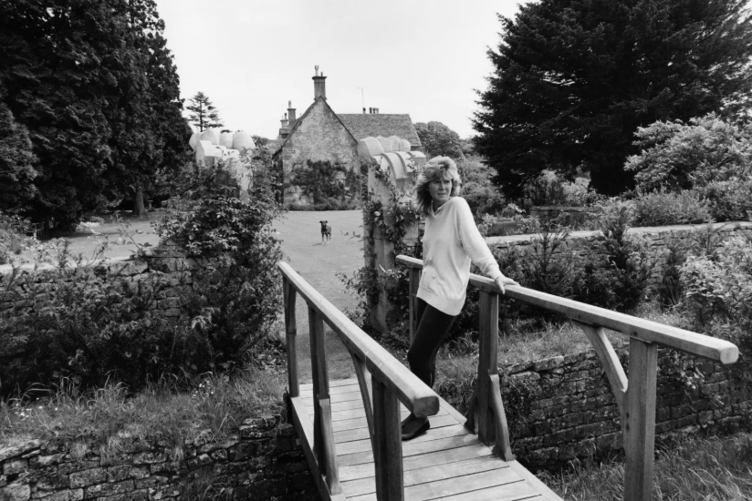
Cooper’s affection for Gloucestershire was well established. Born in Essex in 1937, she moved to the county during the 1980s and made her home near Bisley, in the Cotswolds, for decades.
The landscape and social world around her helped shape Rutshire, the imaginary county that became the backdrop for some of her most successful books. Country houses, village rivalries and sporting passions were recurring features.
Rutshire was never simply a disguised map of Gloucestershire. Cooper borrowed elements of places and people, then exaggerated and rearranged them to create a recognisable but gloriously unruly fictional world.
That freedom was central to her appeal. Readers could enjoy the familiarity of rural Britain while escaping into a world of extravagant parties, fierce competition, romantic entanglements and characters who rarely behaved as expected.
By the time she wrote Tackle!, Cooper was in her eighties, yet the book retained the warmth, mischief and larger-than-life storytelling that had made her a bestselling novelist.
Football represented fresh territory, but the underlying themes remained familiar. Ambition collided with affection, public reputations concealed private worries and supposedly confident characters discovered that money and status could not solve everything.
For Rupert, the greatest challenge was not controlling a football club but facing the possibility of losing Taggie. The former reckless antihero had become a husband frightened for the person he loved most.
Taggie, meanwhile, faced her diagnosis with resilience, bringing a quieter emotional dimension to a series more commonly associated with scandal, glamour and spectacular rows.
Their story helped give Tackle! the quality of a farewell, even though Cooper did not formally close the Rutshire Chronicles. Readers could leave Rupert and Taggie together, confronting uncertainty side by side.
Following Cooper’s death in October 2025, aged 88, that conclusion acquired an additional poignancy. Her final completed novel now stands as a late chapter in a fictional world she had developed over decades.
The television success of Rivals has also introduced her characters to viewers who may never have opened one of the novels. The adaptation brought the excesses and rivalries of Rutshire to a new audience.
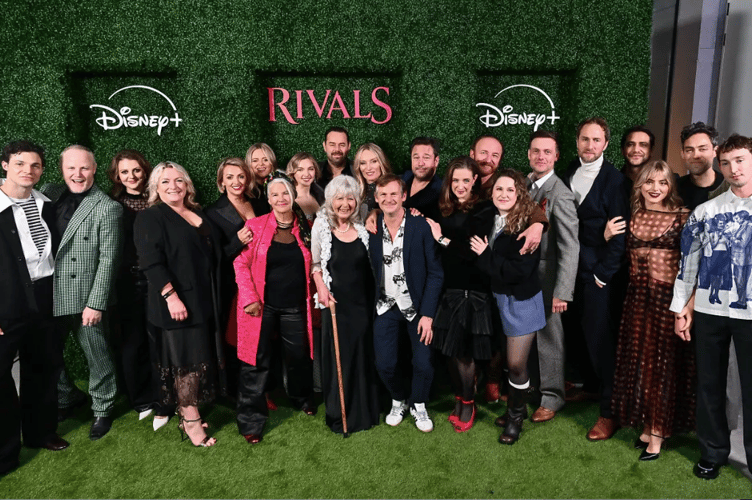
With the second half of its second series due in November, attention is once again turning towards Rupert Campbell-Black and the extraordinary cast of characters surrounding him.
Some viewers may discover Tackle! after watching the programme, finding an older Rupert whose priorities have shifted dramatically since the days of his earliest adventures.
For Gloucestershire readers, there is another pleasure in tracing the familiar landscape beneath Cooper’s inventions. Her imaginary county was never real, but its villages, fields and woodland often felt rooted in the countryside she loved.
The Forest of Dean connection should therefore be treated as an intriguing resemblance, not an established source. Even so, the imagery of Deep Woods makes it easy to picture football unfolding against a backdrop of trees and hills.
That possibility adds local interest to a novel whose central concerns remain universal. Families change, relationships deepen and familiar places take on new significance as people grow older.
As Rupert prepares to return to television, Tackle! remains a reminder of Cooper’s ability to mix exuberant entertainment with moments of tenderness and reflection.
For many readers, it was the final completed instalment in one of British fiction’s enduring love stories. For others in Gloucestershire, it also evokes the countryside that helped inspire its creator.
Comments
We've recently changed our login process. If you have an account for commenting, you will need to re-register on the login window.
This article has no comments yet. Be the first to leave a comment.