
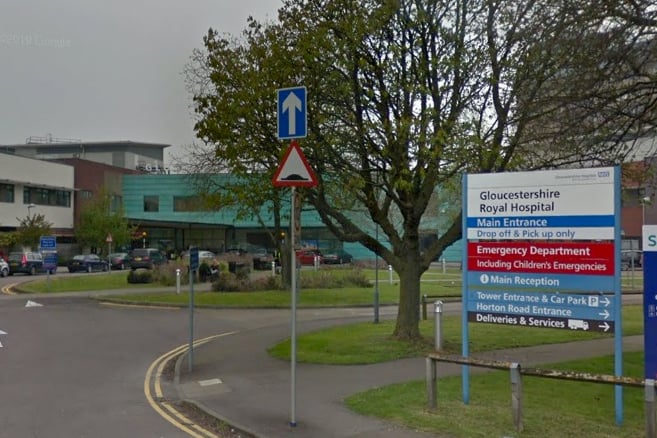
WOMEN giving birth in Gloucestershire have faced racial and class discrimination according to a “devastating” report which has laid bare the extreme staffing pressures at maternity units in the county.
A national investigation into maternity services was published this week highlighting serious concerns at Gloucestershire Hospitals NHS Foundation Trust.
The county’s birthing service was among 12 investigated across the country as part of the Baroness Amos-led Independent National Maternity and Neonatal Investigation.
During their visit, over two days in December last year, the investigation team spoke to families about and staff working there to understand their experience.
Staff consistently described services being under sustained pressure, with demand and complexity increasing faster than their capacity and resources.
“We were repeatedly told by women and families that they were not listened to when they raised concerns, even when those concerns related to changes in their body, their baby’s movements, or symptoms that felt urgent or frightening,” the report reads.
“Many women said they felt a strong sense that ‘something wasn’t right’ but were dismissed or their concerns were minimised, leaving families feeling powerless, anxious and unsafe, particularly at moments when they were most vulnerable.”
The report says women and families described long waits, uncertainty about when care would happen, and delays in being seen, transferred or discharged, sometimes while in established labour or experiencing complications.
And some women also felt that decisions about their care were being shaped by a lack of space rather than by clinical need or personal choice, including being moved between areas, asked to leave rooms soon after birth, or being unable to continue with planned care.
One woman said she was told “we need the room,” which left her feeling that capacity pressures were being placed above her wellbeing, according to the report.



The investigation team was told women’s concerns about their own or their baby’s health were sometimes dismissed, and that this was made worse by poor communication and a lack of involvement in decisions about care.
They described not always being listened to when symptoms were persistent or worsening, not being given clear or timely information when they needed reassurance and feeling that important decisions were made for them rather
And the team heard about inconsistencies in care and treatment with one family telling them they noticed a clear difference in how they were treated once staff became aware that they worked in healthcare.
Some women linked unequal care to race, class and level of education, and described being acutely aware that these factors shaped how safe they felt in maternity services.
One of the women told them “I’ll be okay because I’m white and middle class and I work for the hospital. That’s the reality of it…. If my care can still be pretty poor at times, it makes you wonder how everyone else is being treated.”
Other women described feeling that those who were younger, quieter, or less confident were spoken to more condescendingly or were less likely to be listened to. Families also told them that inequalities were reinforced by those who felt able to advocate strongly, complain, or “make a fuss”.
A black family described being racially stereotyped and how this affected the way they were spoken to, the report says.
One woman said: “I just thought, ‘is she trying to give me a negative connotation that I’m an angry black lady?’ No, I just want to know what’s happening.”
The team also heard how this worsened their anxiety as they were aware of evidence about worse outcomes for black women and were seeing this happen in how they were spoken to.
“I couldn’t relax… knowing the statistics, that black women[‘s] mortality rates are so much higher.”
The report also highlights how frontline staff said women were increasingly presented with multiple needs within the same appointment.
This created pressure to balance safe care with limited time, while also causing long waits for other women.
Several staff described the emotional impact of working in these conditions, including what they referred to as “moral injury”, when they were unable to provide the level of care they felt women needed because of workload and capacity constraints.
They told the investigation that induction rates have increased significantly without a matching increase in capacity.
Staff also described having to tell women that an induction was needed but that they could not yet be admitted because no bed was available and said this was distressing for women and difficult for staff to communicate.
“We induce so many women, but we haven’t really got capacity to induce them… we’re just going to scare you. Send you home for 48 hours and when we’ve got space you can come onto the ward. Which also is awful,” one member of staff said, according to the report.
Neonatal staff also described periods of extreme pressure when units were operating beyond what felt like safe staffing levels.
Conservative councillor Andrew Gravells, who sits on a Gloucestershire County Council committee which scrutinises the health service, said the report was extremely upsetting and he cannot understand how the sad situation arose in the first place.
“The report is quite devastating and it paints a sad and upsetting picture of what some women experience when they’re in hospital about to give birth,” he said.
“More needs to be done now around maternity services across the county, and I hope that the health and overview scrutiny committee will agree to do some work on this, given what we’ve read in this very informative but extremely upsetting report.”
The hospitals trust is deeply sorry to the women, babies, families and staff and hospitals chiefs are also deeply concerned by the accounts of discrimination and wider social inequalities experienced within maternity services.
Bosses say they know there is more to do, and are committed to improving the consistency, safety and quality of care for every family.
Chief Nurse Matt Holdaway said the report is a painful reminder of what can happen when women and families are not listened to or involved in decisions about their care.
“Behind every finding are real people, real experiences and, for some families, deep hurt and grief. We know that saying sorry is not enough; people need to see that we have listened, learned and are making real changes.
“Many of the issues in these reports are already known to us and have shaped the work we have been doing over the last four years. But what matters most is how women and families experience our care. Where we have fallen short, we must be honest about that and act quickly and with humility.
“Maternity care is changing, and many women and babies now have more complex needs. Our responsibility is to make sure our services are safe, consistent and compassionate, and that women and families feel informed, respected and involved in their care.
“Our staff work hard every day to give the best care they can, often in difficult circumstances, and we are grateful for that. But hard work alone is not enough. We must make sure staff have the support, leadership, training and culture they need to give care that is safe, kind and centred on women, babies and families.
“We know there is more to do. We are working hard to safely reopen Cheltenham Birth Unit and our home births service and will be working with communities to ensure services are shaped around their needs.”
Comments
We've recently changed our login process. If you have an account for commenting, you will need to re-register on the login window.
This article has no comments yet. Be the first to leave a comment.