
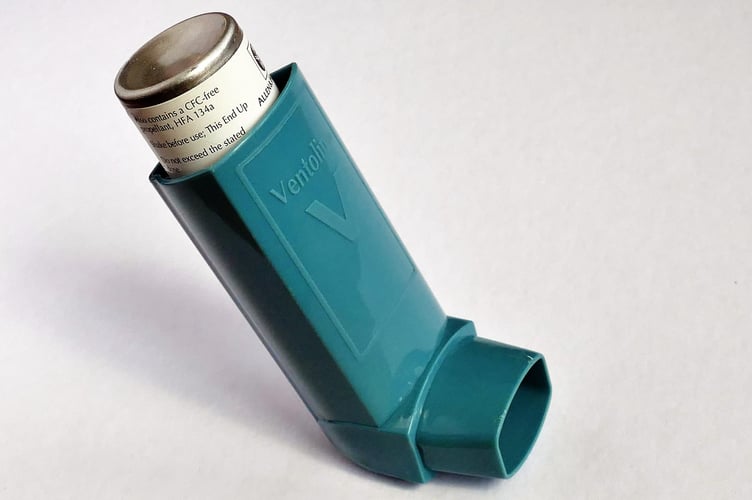
A GREEN initiative involving Gloucestershire GP practices is encouraging people with asthma to swap from MDI to DPI inhalers in a bid to help the environment.
Thirty GP practices in the county signed up for the initiative led by the National Service for Health Improvement.
Practices were invited to participate in the project that offers an alternative to prescribing Metered-Dose Inhalers (MDI), which use gases that affect the environment. NHS Gloucestershire said Dry Powder Inhalers (DPI) are better for the environment because they do not use powerful greenhouse gas propellants like MDIs.
Mark Gregory, Senior Pharmacist at NHS Gloucestershire said: “Initially we invited GP practices which have a higher rate of MDI prescribing as a priority and we’re really happy with the uptake so far.




“I think the general feeling within GP practice teams is that if clinicians can explain the benefits to patients of swapping inhalers as well as the environmental impact then it’s a really positive step.”
The project involved specialist respiratory nurses being placed within practices to carry out inhaler reviews. Under the project, 448 patients swapped from MDI to DPI inhalers and NHS Gloucestershire ICB has one of the lowest average carbon footprints per inhaler in the NHS.
Data from the Medicines Optimisation Team at NHS Gloucestershire shows that one MDI to DPI inhaler swap saves 10,764 grams of CO₂ which is roughly equivalent to driving 27 miles in a petrol car.
Carol Stonham, Respiratory Nurse Specialist, added: “The best way to reduce the carbon footprint associated with asthma medication is to optimise care so that symptoms are controlled and asthma does not flare up. That way, there is no need for unscheduled care.
“The move to lower carbon footprint inhalers is also important and has to be done with consideration for each individual patient, how well their symptoms are controlled, their inhaler preference and how that fits into their personalised asthma action plan.”
Comments
This article has no comments yet. Be the first to leave a comment.