
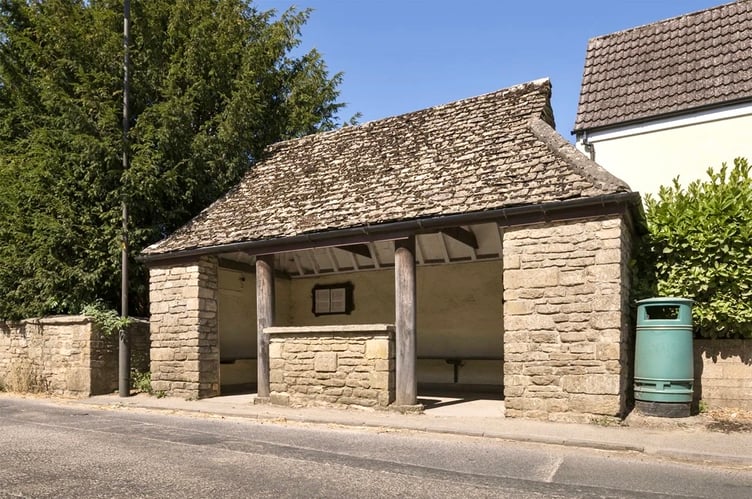
A RARE ‘Festival of Britain’ bus shelter designed by a world renowned Forest-based architect has been granted Grade II-listed status after being put forward by Historic England.
The shelter in Hillesley in the Cotswolds was designed by Modernist architect Berthold Lubetkin to celebrate the 1952 festival and is thought to be one of only four of its kind in the UK.
Lubetkin, whose designs included the now Grade I-listed London Zoo Penguin House and Gorilla House, had moved to Upper Kilcott near Newent to manage a farm in World War II before buying the property himself and raising cattle there.
Prior to the festival, parishes across Britain were encouraged to mark the national event with lasting improvements in their local area.
The Festival Office ran a competition to design new rural bus shelters, stipulating that proposals should be based “on the use of local materials, so that the structures would fit harmoniously into the surrounding landscape”.
And Georgian-born Lubetkin – having also designed the award-winning Highpoint housing complex, Finsbury Health Centre and Spa Green estate in London and Dudley Zoo in the 1930s, but disillusioned by politics and architecture in the post-war period – volunteered his services to to Hillesley Parish Council.
Rachel Williams of Historic England said: “This bus shelter might look like an ordinary part of the daily commute, but it has a fascinating story to tell.
“As one of the surviving structures from the Festival of Britain, it’s a little piece of post-war history hiding in plain sight.
“Listing it means we can help make sure this unassuming but important part of our everyday surroundings is around for future generations to enjoy.”
Catherine Croft, Director of the Twentieth Century Society, added: “Modest but definitely not Modernist, this traditional Cotswold vernacular bus shelter demonstrates the remarkable versatility of its famous architect, Berthold Lubetkin.

“Lubetkin’s famous maxim was ‘Nothing is too good for ordinary people’ - even those waiting for the next rural bus service!
“From the pioneering Finsbury Health Centre to the sculptural Penguin Pool at London Zoo, we’re delighted to see his Festival of Britain shelter join them on the national register of listed buildings.”
Lubetkin, whose Warsaw-based parents were tragically presumed to have been killed by the Nazis in Auschwitz in 1940, was awarded the Royal Institute of British Architects Gold Award in 1982, their highest honour. He died aged 88 in Bristol in 1990.
His bus shelter is made with distinctive Cotswold limestone masonry and a stone slate roof.
The simple, well-composed structure is a unique example of Lubetkin working in a traditional manner rather than the more radical style for which he is best known.
Hillesley bus shelter is one of two listed bus shelters constructed as part of the Festival of Britain, with the other is in Farmington.
The Festival of Britain 74 years ago was organised to give the public a sense of recovery and progress following World War Two.
Focused around London's South Bank, it was a government-sponsored event starting in the summer of 1951, celebrating and promoting Britain's excellence in design, technology, industry, architecture, science and the arts.
Comments
We've recently changed our login process. If you have an account for commenting, you will need to re-register on the login window.
This article has no comments yet. Be the first to leave a comment.