
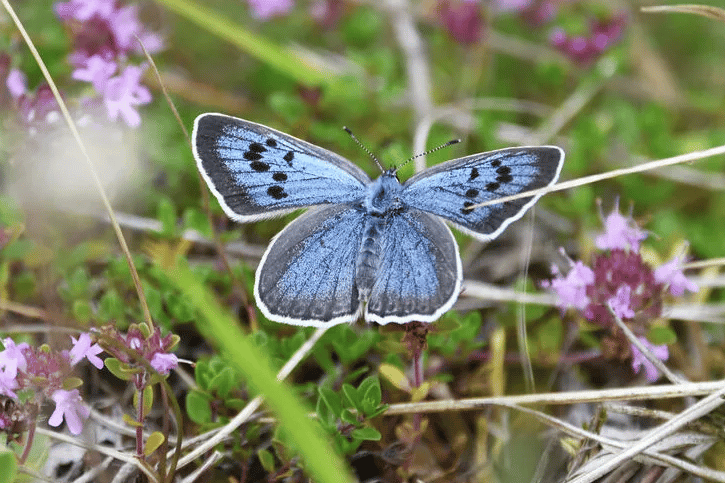
SCIENTISTS are investigating how climate change and extreme weather could be affecting some of Gloucestershire’s rarest insects and plants as part of a major new conservation project.
The Royal Entomological Society is leading research across Gloucestershire, Somerset and Wiltshire aimed at understanding how six threatened species living in lowland chalk grassland are responding to a changing climate.
The project will study the Large blue butterfly, Duke of Burgundy butterfly, Marsh fritillary butterfly, Wart-biter cricket, Juniper and Burnt-tip orchid.
Researchers hope the findings will help update habitat management guidance, some of which was written more than 20 years ago, and give conservationists practical ways to make important grassland habitats more resilient to heatwaves and other extreme weather.
The work builds on internationally recognised research by the society and Gloucestershire Wildlife Trust which helped the Large blue butterfly recover after it was declared extinct in the UK in 1979.
David Simcox, conservation project manager at the Royal Entomological Society, said wildlife was facing many of the same pressures people experience during periods of extreme weather.
He said combining decades of research with new science would help scientists understand how endangered species were responding and provide practical guidance to support their recovery.
Gloucestershire Wildlife Trust’s Emma Hutchins said the county was fortunate to be home to some of the UK’s rarest species and most precious habitats.
She said more information was needed to help conservationists mitigate the effects of climate change and extreme weather.
The project is among 130 being funded through Natural England’s £60 million Species Recovery Programme, part of the Wild Again initiative.



Other partners include the National Trust, Plantlife, Smart Land Management & Ecology, Pewsey Downs Farmers Group and The Crown Estate.
The research will combine long-term insect datasets with new field studies and practical conservation work benefiting wider landscapes.
Comments
We've recently changed our login process. If you have an account for commenting, you will need to re-register on the login window.
This article has no comments yet. Be the first to leave a comment.