
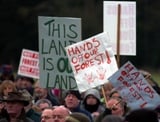
THERE has been a mixed reaction to the Bishop of Liverpool's report into the future of the nation's Forest's.
The Independent Panel on Forestry, has today (4 July) published its final report to Government.
It recommends the expansion of woodland cover from 10 percent to 15 percent by 2060 and a new legal charter to protect it.
But it also highlights what it calls the 'triple bottom line' and calls for a revival of a woodland culture that appreciates how important trees are for people, for nature and the economy.


Some fear that the recommendation to create a new body to free the Forests from political control could actually lead them prey to commercial interests rather than protect them.
Importantly it calls for the creation of a new legal charter that hold the public forest estate in trust for the nation so that it will always remain in public ownership and would be renewed every 10 years.
It would be delivered through a group of Guardians, or Trustees, who would be accountable to Parliament.
?A separate, expanded Forest Services organisation would work with private land owners to help them manage their woods, increase timber production and regulate the Forestry sector.
It would also provide expertise on issues such as tree pests and diseases.
Chairman Rt James Jones said his very first visit, which was to the Forest of Dean, shaped his thinking throughout.
He said: "The Panel's work over the last year has shown that our woodlands, managed sustainably, can offer solutions to some of the most pressing challenges facing society today.
"There is untapped potential within England's woodlands to create jobs, to sustain skills and livelihoods, to improve the health and wellbeing of people and to provide better and more connected places for nature.
"Most importantly, the public forest estate needs to be free from the electoral cycle, for trees have long lifecycles - decisions taken now are looking to a future that is 50, or even 100, years down the line.
" And the bodies managing the public forest estate and advising woodland owners need to evolve and be free to become much more entrepreneurial."
The report says the public forest estate is the single largest provider of outdoor leisure and recreation in England and the single largest timber producer, as well as being a vital habitat for wildlife.
It says the 80 percent of woods outside the public forest estate need to be more sustainably managed to create a substantial impact.
The report says the £20m investment into Forests this year compares to just 90p per household or 38p per person per year.
In comparison, £160 million was spent to make a 9km stretch of the A453 into a dual carriageway.
See the Forester tomrrow for full report and views.
Comments
This article has no comments yet. Be the first to leave a comment.