

Fast-track home adaptations for people suffering rapidly progressing and highly debilitation conditions such as motor neurone disease will be further improved at a Gloucestershire council.
Forest of Dean District Council has a policy to provide grants to help pay for disabled facilities and has a good track record in delivering timely adaptations and in prioritising urgent cases, a council meeting heard last week.
But councillors want to do even more to help people who suffer such conditions given their unpredictable and rapidly progressing nature.
The council believes that improving its policy and practice is required to ensure consistency, transparency, and reassurance for residents and their families.

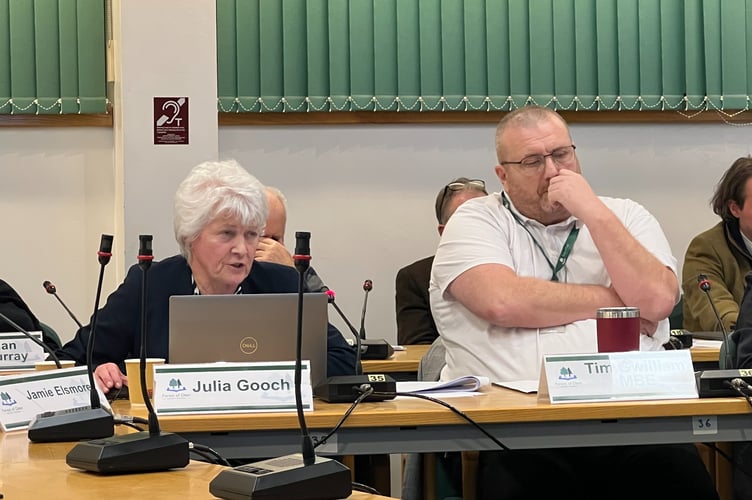
Councillor Julia Gooch (Progressive Independents, Newent and Taynton) proposed a motion which called for clear target timeframes which would see simple adaptations such as ramps, stairlifts and toilets installed within 30 days and more complex installations done in 90 days.
The council also agreed to publish quarterly performance reports against these targets and allow applications to be made at the point of diagnosis.
This would be done with the involvement of occupational therapists so that adaptations can anticipate future needs rather than respond only in crisis.
Councillor Gooch thanked the council for a thoughtful debate and said the changes would “send a powerful message that this council stands ready to support people at their most vulnerable moments”/
“This motion is not about creating new bureaucracy. It is about removing barriers and ensuring that when families are confronted with life changing diagnosis, they can rely on their council to act swiftly, compassionately and transparently,” she said.
The council also agreed to review the current £15,000 discretionary cap to ensure it is sufficient for larger adaptations where rapid delivery is critical.
And ensure professional fees are not deducted from the discretionary limit, so that funding is focused on adaptations themselves.
The changes will also mean clear, accessible information will be provided to residents and families about the fast-track process, eligibility, and expected timeframes.
And a named officer will work on urgent cases to support families through the process.
The council’s disabled facilities grant policy will be updated to reflect these strengthened commitments, ensuring alignment with the MND Association’s Unlocking the Door campaign.
Few diseases are as devastating as motor neurone disease (MND). It is a progressive and incurable condition which affects the brain and central nervous system, eventually leaving people unable to move, speak, swallow and ultimately breathe. A third of people with MND die within a year of diagnosis, and more than half within two years.
As diseases such as MND progress, timely home adaptations are critical to maintaining good health and wellbeing for as long as possible. Without them, people already trapped in failing bodies can find themselves trapped again in inaccessible homes, leading to isolation, injury, illness and emotional distress.
An accessible home can prevent isolation, reduce accidents, slow physical and mental health decline, and help avoid unnecessary hospital admissions and home adaptations are crucial in helping people stay healthy and maintain independence longer, supporting the shift from illness to prevention and from hospital to home
Comments
This article has no comments yet. Be the first to leave a comment.