

Last week I launched a Mock Youth Parliament bringing together students from all six secondary schools across the Forest of Dean. Five Acres High School, Dene Magna School, The Dean Academy, Forest High School, Newent Community School and Sixth Form, and Wyedean School and Sixth Form Centre are all involved, and it’s great to have everyone taking part.
This project aims to educate young people in how Parliament really works, including how debates are structured and the roles people play in the chamber, while building their confidence to speak up on the issues that matter most to them. Most importantly, it gives them the tools to see politics as something they can be part of and influence.
That matters more than ever as the Government moves forward with its pledge to lower the voting age to 16. Empowering young people to use their voice is so important, while feeling confident to use them purposefully in a way that aligns with their values.
Engaging with young people and hearing their views is one of the most important parts of my role. Spending time in our classrooms is a reminder that the future of the Forest of Dean is taking shape every day, and I’ve really valued the chance to see that firsthand during our first mock parliament session.
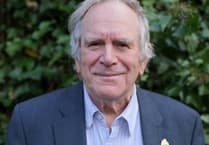



The mock parliament brings together students from Year 9 through to sixth form, with students already specialising in politics to those just beginning to explore how our democracy works. Events and initiatives like this break down barriers to politics and help ensure it’s open and accessible to all. Our political system will only benefit from cultivating voices from all backgrounds.
The launch session was the first of five, held over two hours at Five Acres High School—huge thanks to them for hosting. My team and I introduced the basics of debate and parliamentary protocol. Ahead of the session, students had submitted topics they cared about, which we narrowed down to three: the use and restriction of AI, banning social media for under-16s, and aviation and its impact on climate change.
Students were split evenly into government and opposition groups, nominated their leaders and whips, and began developing their arguments. We were also lucky enough to have the Chief Whip, Jonathan Reynolds MP, dial in online for a Q&A and a workshop on the role of a whip, and I was grateful for his contribution and involvement.
Looking ahead, the next session will be hosted at The Dean Academy, where we’ll go deeper into debate technique and scrutinise the details of a mock parliamentary bill. All of this builds towards a final debate later in the year in the district council chamber.
Thank you to all of our secondary schools for getting involved, and most of all to the students for their enthusiasm, insight and willingness to get stuck in. It’s been fantastic to see and it gives me real confidence in the future of the Forest of Dean.
Comments
We've recently changed our login process. If you have an account for commenting, you will need to re-register on the login window.
This article has no comments yet. Be the first to leave a comment.