
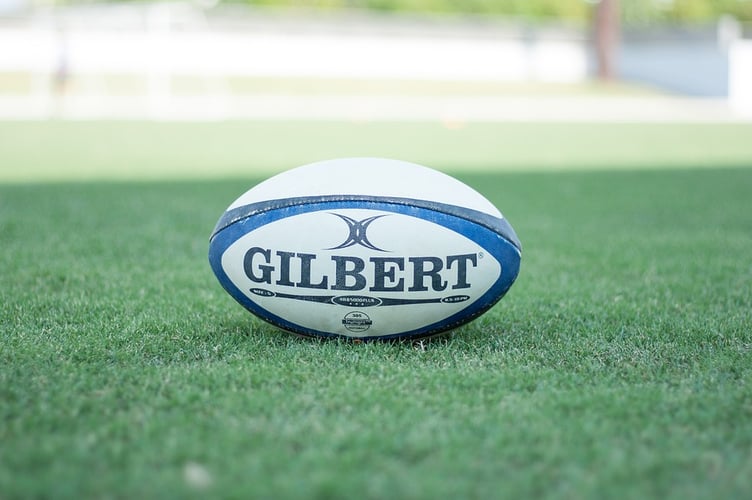
The new game of ‘Rugby Union’ is barely recognisable to an old rugby player, referee, fan and administrator like myself. We’re well into the rugby season, with almost all clubs in a league structure as fixtures secretaries become obsolete and the ‘league’ arranges fixtures.
There are league matches each week, with few ‘friendly’ matches – old local rivalries such as Bream v Yorkley (Yorkley having folded), or v Bream v Dymock (now in a higher league) are no more, and matches against Welsh teams are no longer possible as they have their own leagues.
Berry Hill are now languishing in a lower league., but with a famous front row many years ago, including the late, great, mighty Brian Harris, they beat London Welsh (when the Welsh had a formidable team of many internationals) in the national knock out cup competition, only to lose in an honourable defeat to Harlequins 4-17 (when a try was worth 4 points). This was a great opportunity for a provincial team to play against a top team, which is not feasible in these days of professionalism.
The game when I played it was a hypocritical ‘mess’. I played in the north of England, where the lure of payments attracted some union players to the professional Yorkshire and Lancashire rugby league clubs just a few miles south. Rugby league was also an attraction for great Welsh rugby union players, who would leave behind the coal mines and rugby union world of the valleys and go north to earn some money. They would be named as ‘AN Other’ in rugby league match programmes until their breach of union amateurism had become final. These league converts, as soon as their defection had become public, would be expelled from the rugby union world and excluded permanently from their old club houses.

.png?width=209&height=140&crop=209:145,smart&quality=75)
But the growing demands for a ‘better’ game with the potential threat from a growing Rugby League presence brought about range of reforms which gradually brought some modernity to the Union game.
The line out throw in used to be a casual throw from a winger. It’s now a highly practiced action from the hooker, who is specially trained to make the throw and to understand how to advise colleagues where the ball is going to be aimed. The try was revalued to 4 then 5 points, so clubs had an incentive to go for exciting tries rather than relying on boring penalty kicks to win matches. You can’t now kick direct to touch outside your own 22 (22 metres, not the former 25 yards) area, so you have an incentive to keep the ball in play. The forwards now pack in a 3-4-1 formation (3 in the front row, 4 in the second row, including the wing forwards, leaving the poor number 8, who used to be the middle of the back row when there was a 3-2-3, on their own at the back). This makes for more powerful scrums and brings the wing forwards closer to their marked opponents.
The game is far more structured and player and spectator friendly than it used to be, and it is good to see that, in spite of the league based rugby systems, in the Forest of Dean the Combination cup is still going strong. The three major clubs (Lydney, Berry Hill and Cinderford) play their second or (‘United’) in this an end of season knock out competition with Drybrook, Bream, Westbury, Yorkley and Ross. The competition would usually end with a victory for one of the ‘United’ teams of the big three, but it was good to see this year that Westbury and Drybrook both reached the final, and the Forest’s most junior club, Westbury, were the 2024-25 Combination Cup winners.
Rugby Union is secure as the most successful and popular rugby code.
Comments
We've recently changed our login process. If you have an account for commenting, you will need to re-register on the login window.
This article has no comments yet. Be the first to leave a comment.