
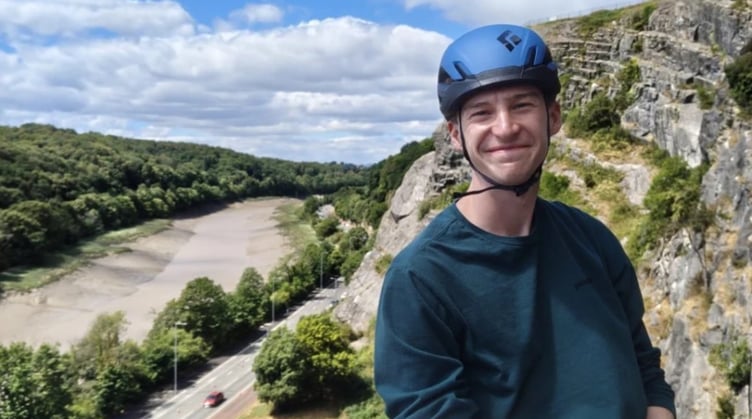
A ROCK climber who suffered a collapsed lung and broken bones in a fall at a Wye Valley beauty spot has become one of the first patients to take part in a major national study aiming to improve treatment for chest injuries.
Bristol-based vet Lewis Bruten set out on a climbing expedition to the Wintour’s Leap cliffs near Woodcroft in August, but fell onto a boulder and suffered major injuries.
“I'd just negotiated a difficult overhang, and got myself into a position where I couldn't get myself back and ended up falling,” he said.
“Because of the way I fell, the protection I'd placed was pulled away from the rock rather than taking my weight, and I landed shoulder-first on a boulder, breaking both my right shoulder blade, four vertebrae and six ribs.”
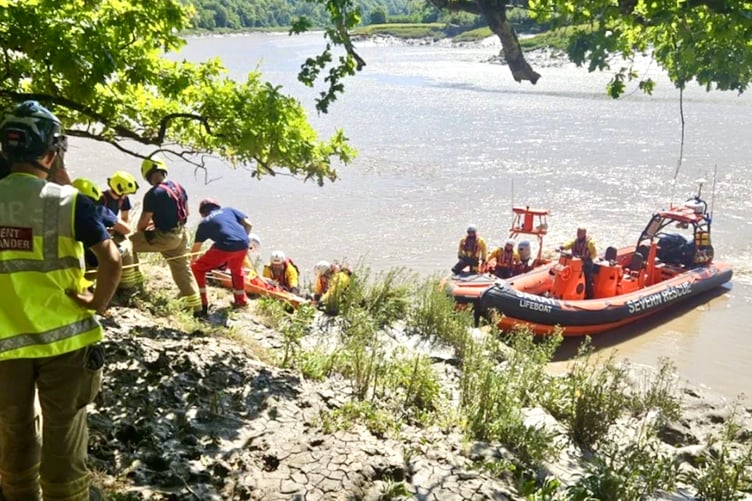
Bristol NHS Foundation Trust said his climbing partners quickly raised the alarm, and following a complex four-hour rescue – involving Gloucestershire Fire & Rescue Service, Severn Area Rescue Association lifeboat crews, a helicopter on standby and paramedics - he was transported to Southmead Hospital's Emergency Department.
Lewis was also diagnosed with a haemopneumothorax, a serious medical condition where both blood and air collect around the lungs, requiring a chest drain tube inserted through the chest wall to help drain the blood.
He agreed to taking part in an emergency medicine research study before the chest drain was inserted, using a less invasive smaller tube that doesn’t require surgery.
He “was on quite a lot of morphine and felt really unwell” and “gave my informed consent a few days later”, he told BBC Bristol.


"Before my fall, I'd never really thought about how emergency care research is done.
“Knowing that my experience could help improve treatment for future patients made me feel I was contributing something positive from a very difficult situation,” added the vet, who has since regained full range of movement in his shoulder and is planning his next climbing adventure.
The University of Bristol's CoMIT-ED 2 research is led by Bristol NHS Foundation Trust (BFT) emergency medicine consultant Dr Edd Carlton, who said: “The study is about testing whether a less invasive chest drain with a smaller tube is better than traditional drains with larger tubes that require surgery to insert.
“We’re recruiting over 1,500 adult patients from more than 50 trauma centres and units across the UK. Lewis’ injuries meant he was a good candidate for the study.
"If the lung continues to collapse and the air accumulates around the lung, people can actually stop breathing or their heart stop.
"Every improvement in emergency care starts with research. Patients like Lewis make it possible for us to find better ways to treat people in some of the most critical moments of their lives.
“We know that about one in five patients who suffer serious accidents have significant chest injuries.
"If these smaller drains do help and reduce complications, that will aid their pain during recovery, and help them recover from the other injuries that they've sustained."
Comments
We've recently changed our login process. If you have an account for commenting, you will need to re-register on the login window.
This article has no comments yet. Be the first to leave a comment.