
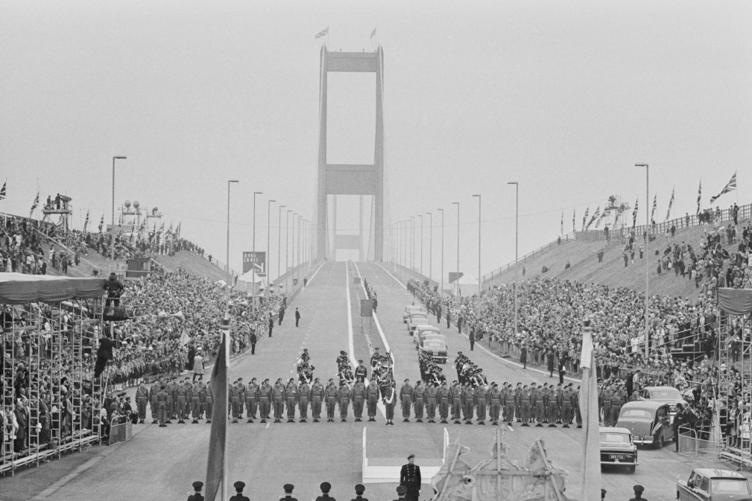
THE Severn Bridge is marking its 60th anniversary today, six decades after the landmark crossing transformed travel between the Forest of Dean, South Wales and the West Country.
The bridge was officially opened by Queen Elizabeth II on September 8, 1966, creating a direct road connection across the Severn and dramatically changing journeys for communities around Beachley, Tidenham and Chepstow.
Before the bridge, crossing the Severn was a very different experience.
A ferry had operated between Beachley and Aust for centuries, with records suggesting crossings at the site dated back as far as Roman times.
By the 20th century, the ferry was carrying cars between the two sides of the river, although larger vehicles still faced lengthy journeys around the Severn.
As road traffic increased after the Second World War, the need for a permanent crossing became increasingly apparent.
Construction of the Severn Bridge began in 1961, with work on its huge steel superstructure getting under way two years later.
When it opened five years later, the bridge represented a major feat of British engineering.
Its main suspension span stretched for almost 988 metres and its innovative design would go on to influence bridges around the world.
Historic England describes it as the first bridge in the world to combine an aerodynamically shaped deck with inclined suspension hangers.


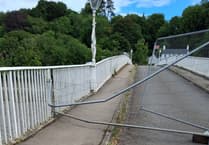
The wider crossing also included the Wye Bridge, carrying motorists over the River Wye between Beachley and Chepstow.
Queen Elizabeth II officially opened the crossing on September 8, 1966, accompanied by the Duke of Edinburgh.
Its arrival also brought centuries of ferry travel at Beachley to an end.
The Aust to Beachley ferry made its final crossings as the bridge opened, closing a chapter in the history of travel across the Severn.
Just months before it disappeared, the ferry received an unlikely famous passenger.
Bob Dylan was photographed waiting at Aust in May 1966 while travelling between Bristol and Cardiff during his celebrated and controversial 1966 world tour.
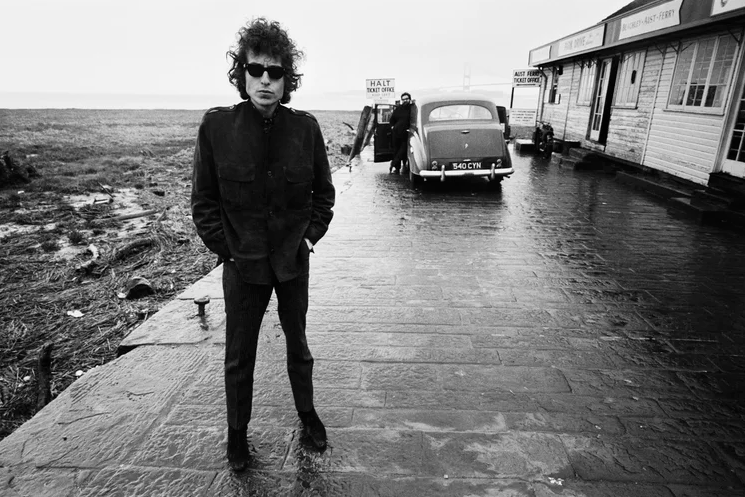
Behind him stood the almost completed Severn Bridge, creating an image which captured the old and new ways of crossing the river at the same moment.
For motorists, the bridge made journeys between the two sides of the Severn considerably easier, although using it initially came with a toll.
Cars were charged two shillings and sixpence when the crossing first opened.
Traffic continued to grow over the following decades and eventually exceeded what had been envisaged when the bridge was designed.
The Government committed to building a second crossing in the 1980s and the Second Severn Crossing opened in 1996, exactly 30 years after the original.
Now known as the Prince of Wales Bridge, the newer crossing became the main M4 route across the Severn, with the original bridge becoming part of the M48.
Another major change came in December 2018 when tolls on both Severn crossings were abolished, ending more than half a century of charges for motorists.
Despite no longer carrying the main M4, the original bridge remains an important transport link and one of the most recognisable landmarks on the border between England and Wales.
Its engineering significance has also been formally recognised, with the Severn Bridge and Aust Viaduct given Grade I listed status.
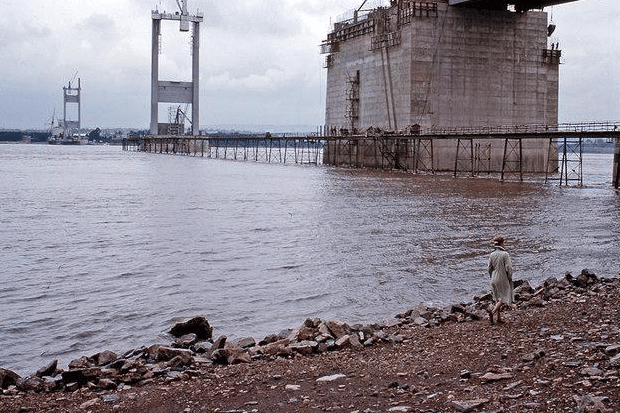
Its western end reaches Beachley, placing one of Britain's most significant pieces of 20th century transport infrastructure on the doorstep of the Forest.
Today, 60 years after the Queen officially opened the crossing, thousands of motorists continue to use a bridge which fundamentally changed the way people travelled across the Severn.
Comments
We've recently changed our login process. If you have an account for commenting, you will need to re-register on the login window.
This article has no comments yet. Be the first to leave a comment.