
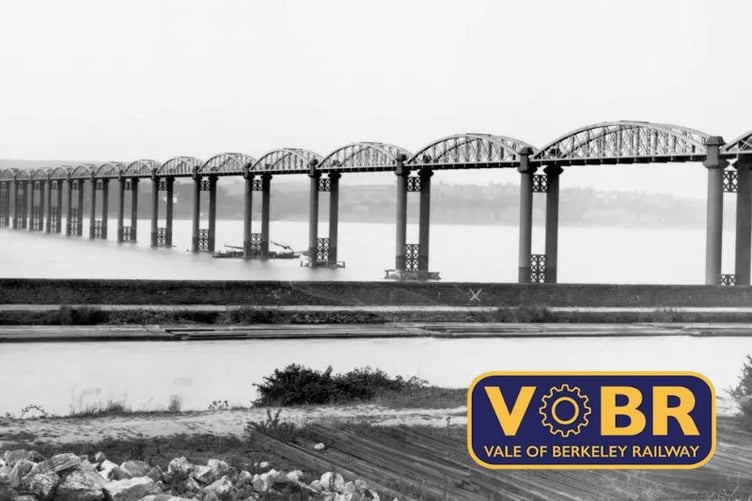
The return of passenger trains to the long-closed Sharpness branch line has rekindled memories of a time when the Forest of Dean was directly connected by rail across the River Severn, with campaigners hoping the revived heritage railway could once again highlight the area's historic transport links.
The Vale of Berkeley Railway welcomed passengers for the first time recently, running scheduled services to celebrate the 150th anniversary of the first passenger trains to Sharpness.
The milestone marked the culmination of more than a decade of work by volunteers to restore part of the former branch line as a heritage attraction.
While the celebrations centred on Berkeley and Sharpness, the reopening also shines a spotlight on a largely forgotten chapter of the Forest of Dean's railway history, when communities on either side of the River Severn were connected by a direct rail route that transformed travel, trade and industry across the region.
When the Sharpness branch opened to passengers on August 1, 1876, it linked the growing docks at Sharpness with Berkeley Road station on the Bristol and Gloucester Railway. The four-mile line was initially built to serve the busy port, but its importance increased dramatically just three years later.
In October 1879, the opening of the Severn Railway Bridge turned what had been a short branch into a strategically important through route connecting Sharpness directly with Lydney and the Forest of Dean.
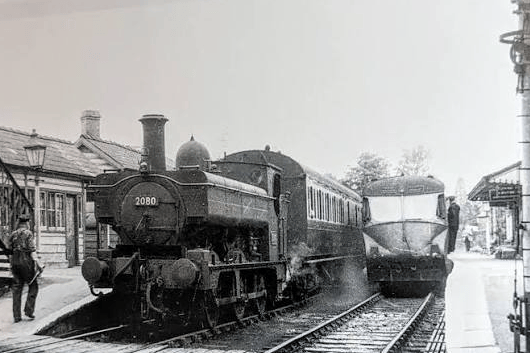
For the first time, trains could cross the River Severn at its lowest point, creating a valuable rail corridor between Gloucestershire's industrial communities and the national railway network.
Built by the Severn Bridge Railway Company, the bridge was conceived primarily to transport coal from the Forest of Dean's collieries to Sharpness Docks, where it could be shipped around Britain and overseas.
However, it quickly became equally important for passenger travel, allowing through services to run between Lydney and Berkeley Road while improving access to communities on both banks of the river.



At the time, the bridge represented a remarkable feat of Victorian engineering. Constructed by Hamilston's Windsor Ironworks Company of Garston, Liverpool, it stretched 4,162ft (1,269m) across the River Severn and remained the furthest downstream crossing until the Severn Road Bridge opened in 1966.
The structure consisted of a masonry approach viaduct leading to 22 spans across the river, including a swing bridge over the Gloucester and Sharpness Canal so vessels could continue navigating the busy waterway.
Around 6,800 tonnes of iron were used in its construction, while trains crossed approximately 70ft above high water, offering passengers spectacular views across the estuary.
Its arrival transformed the economy of the wider area. Coal from the Forest of Dean, timber and other freight could be transported directly to Sharpness Docks more efficiently than ever before, helping the port expand as an important commercial gateway.
Businesses on both sides of the Severn benefited from faster transport links, while residents gained new opportunities to travel for work, shopping and leisure.
The line also proved invaluable during periods when the nearby Severn Tunnel was closed for engineering work, providing an alternative route for diverted freight and passenger trains. Despite being built primarily for industrial traffic, it became an essential part of the regional railway network for more than 80 years.
Ownership of the route also evolved over time. The Severn Bridge Railway merged with the Severn and Wye Railway shortly after opening, before financial difficulties saw the line pass into joint ownership of the Great Western Railway and the Midland Railway in 1894.
The partnership continued operating both passenger and freight services, ensuring the route remained an important cross-river connection well into the twentieth century.
However, the bridge's exposed location across one of Britain's most powerful tidal rivers meant it faced constant challenges from shipping. Strong currents made navigation difficult, and several vessels collided with its piers during its lifetime.
The most devastating incident came in October 1960 when two petroleum barges struck one of the bridge's supports. The impact caused two spans to collapse into the river, killing five men and severing the only direct rail connection between the Forest of Dean and Sharpness.
Initially there were hopes the bridge could be repaired, with engineers assessing the damage and considering reconstruction. However, before any work could begin another vessel collided with the damaged structure the following year.
The additional damage ultimately convinced railway authorities that rebuilding the crossing would not be economically viable.
The bridge was abandoned before being dismantled between 1967 and 1970, leaving only isolated remnants visible today. Although little survives of the structure itself, its legacy continues to shape memories on both sides of the Severn, particularly among older residents who remember travelling across the bridge before its closure.
Without the crossing, the Sharpness route reverted to its earlier role as a branch line serving the docks. Passenger services continued for only another four years before being withdrawn in November 1964 during the Beeching era. Freight trains have continued to operate to and from Sharpness Docks, although services have become increasingly infrequent over the decades.
The current revival has been led by the Vale of Berkeley Railway Trust, which was established in 2015 with the aim of bringing part of the historic line back to life.
Volunteers have restored former railway buildings, created engineering workshops, cleared overgrown trackbeds and developed facilities at several locations, including Berkeley station and the former sidings at Oldminster.
The recent's celebrations marked the first scheduled passenger trains to operate on the route in more than 60 years.
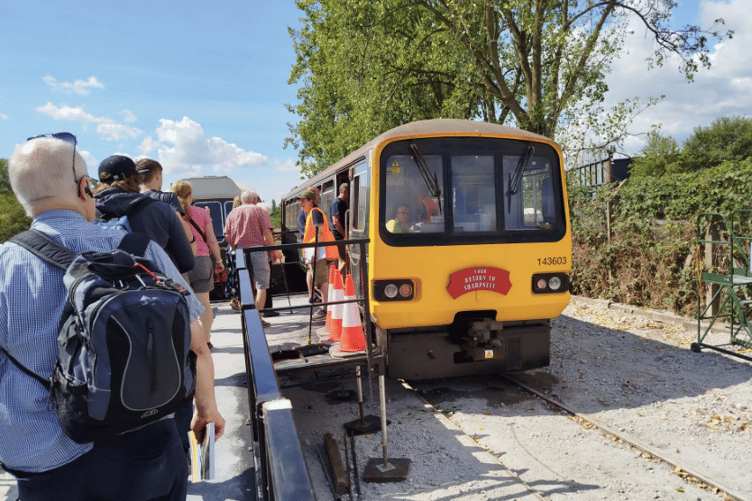
Six services a day carried visitors along the restored section of railway as part of a three-day event commemorating the 150th anniversary of the arrival of the first passenger trains at Sharpness.
Trust chairman Howard Parker said he had been "very touched" by the response from visitors, many of whom remembered the railway from its final years or had family connections to the line.
He said many people attending the event could still remember the last trains before the closure in 1964, while others had travelled long distances simply to see trains running again on a route that had lain dormant for decades.
Volunteer Pamela Conquer said the event also demonstrated the continuing potential of the railway.
She said operating a scheduled passenger service showed the branch remained a "perfectly viable" railway and renewed hopes that stations at Berkeley could eventually reopen alongside a new station at Newtown to improve transport for local communities.
Although there are currently no plans to rebuild the Severn Railway Bridge or restore the historic rail connection to Lydney and the Forest of Dean, the return of trains has inevitably revived discussion about the line's wider significance.
For the Forest, the reopening is about more than a heritage railway. It is a reminder of a period when trains crossed the Severn every day, linking communities, supporting industry and providing a direct connection that shaped the area's economy for generations.
While the restored railway now operates as a heritage attraction rather than part of the national network, its volunteers hope preserving the line's story will ensure the remarkable history of the Sharpness branch and its once vital link to the Forest of Dean is not forgotten.
Comments
This article has no comments yet. Be the first to leave a comment.