
STAND, a group opposed to the building of a new nuclear power station at Oldbury, just across the river from Lydney, take issue with Horizon/Hitachi's view, published in last week's Forester, that it would be good for the Forest of Dean economy, and that storing high level radioactive waste on the site would be safe.
To begin with, there is no evidence that even in the short term there would be many jobs created for Forest of Dean workers – their figures have really just been plucked out of the air.
And it has been reported that the day to day running of the plant, once completed, will be mostly by Japanese workers. The Green party have estimated that many more jobs – long term, local, jobs – will be created if the same effort was put into making the Forest self-sufficient in electricity production using renewable technology.
No amount of jobs can compensate for the damage it will cause to the landscape (wind turbines will pale into insignificance against the huge cooling towers and reactors planned), and, more importantly, for the very real danger it will pose to people in the area.



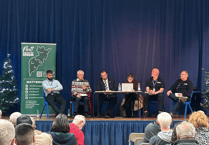
The article last week quoted Dennis Hayden, a nuclear veteran, who pointed out the dangers to health from routine discharges of radioactive particles. That alone should be cause for concern.
But there is also the very real danger of a serious nuclear accident, such as at Three Mile Island, Chernobyl and Fukushima. How ironic that the same edition of the Forester carried a story about children from Chernobyl who come to the UK for a few weeks every year to breath cleaner air in the hope of increasing their life expectancy by a couple of years.
Due to the mis-information coming from the nuclear industry, people are under the impression that the likelihood of a devastating accident is very unlikely. Unfortunately, this is not the case. You do not need to be a whizz at maths to work it out for yourself: There are about 450 nuclear power stations in the world and in the last 30 years or so there have been three very serious accidents, resulting in loss of life, radiation poisoning and evacuation – often permanent – of large areas.
450 divided by three equals 150. So, based on past experience, the odds of the new Oldbury Nuclear Power Station causing a horrendous accident in the next 30 years are about 150-1.
I don't know about you, but I don't call that good enough odds.
Of course the nuclear industry say those accidents can't happen again, they have improved their safety record and so on.
But that is exactly what they were saying to protest groups in Japan just before the Fukushima accident. And the type of reactors that they are planning to build at Oldbury are a new design, not yet approved in this country. Only four have ever been built – in Japan – and they have been plagued with problems, producing less than 50 per cent of their planned output.
If a similar accident were to happen here, and the same evacuation plans put into place, then not only the whole of the Forest of Dean would have to be evacuated, but most of Gloucester and Newport and the whole of Bristol.
Where on earth are all those people going to go? And don't forget that radiation damage is excluded from all house insurance policies.
In answer to Horizon/Hitachi's argument that the site would be a good place to store high level radioactive waste, the Government's own official report into site suitability for storing radioactive material, published by NIREX in 2005, made it clear that Oldbury was not suitable, and in fact recommended that all radioactive materials be removed, as inundation from flooding and rising sea levels would make the site untenable.
He said that the new policy of storing the highly dangerous waste on nuclear power station sites was a desperation measure brought about by the refusal of councils everywhere in the UK – including Cumbria recently – to have it in their area.
John French
STAND
Comments
This article has no comments yet. Be the first to leave a comment.