
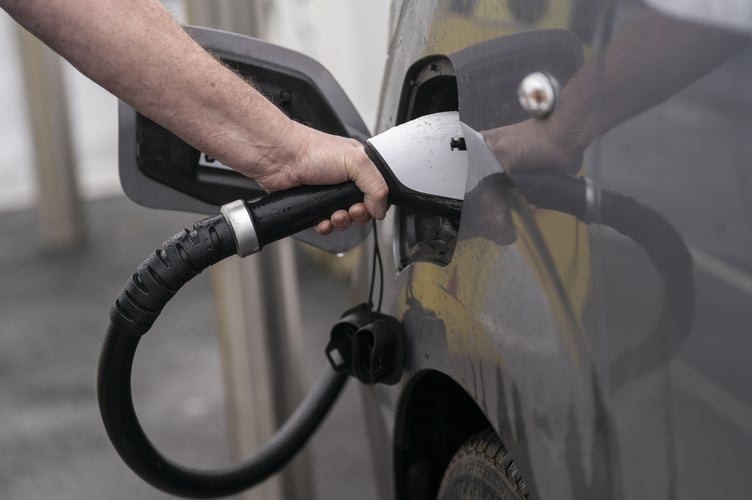
More than 15,000 ultra low emission vehicles were registered in Gloucestershire as of June, recent figures show, as their number increased by more than a third in a year across the UK.
It comes amid government efforts to make low emission vehicles more accessible for households around the country, including by raising the number of public electric vehicles charge points and making at-home charging easier.
Campaign group Friends of the Earth welcomed the increasing number of ULEVs in the UK but said "more must be done" to ensure equal access to electric vehicles across the country, particularly for low-income households.
According to the Vehicle Certification Agency, ULEVs are defined as having less than 75 grams of CO2 per kilometre from the tail pipe. They include pure EVs and other plug-in EVs when driven in electric mode.
 Almost 2,000 ultra low emission vehicles registered in the Forest of Dean – as campaigners group call for more equal access across UK
 Fire-hit family grateful for
"extraordinary" response
Fire-hit family grateful for
"extraordinary" response Road closures: six for the Forest of Dean drivers over the next fortnight
 Explore Rare Finds at Smiths New Year Auction
Figures from the Department for Transport show 17,484 ULEVs were registered in Gloucestershire at the end of June – up 36% from 12,851 a year earlier.
Of those, 11,394 were battery EVs – also known as 'pure EVs' – 79 were plug-in hybrid EVs powered by diesel, 5,397 were plug-in hybrid EVs powered by petrol and 614 relied on other fuel types.
Across the UK the number of ULEVs increased about 34% in a year, from almost 1.85 million in June 2024 to nearly 2.5 million in June 2025.
It means around 5.8% of the 42 million vehicles registered in the country as of June were ULEVs.
However, the change was not felt equally everywhere. While the North East registered a 49% rise in its number of ULEVs, reaching a total of 49,914 in June, the figure only increased by 23% in the South West, bringing the total to 283,336 in the area.
Of the total number of ULEVs registered in the UK as of June, the large majority (around 65%) were battery EVs, about 30% were plug-in hybrid EVs powered by petrol, roughly 0.4% were plug-in hybrid EVs powered by diesel, and around 4% relied on other fuel types.
Sandra Bell, climate campaigner at Friends of the Earth, said: "The increase in EVs is extremely welcome and needs to continue at pace to cut air pollution as well as tackle climate change.
"However, more must be done to ensure the EV rollout is equally accessible across the country, especially for low-income households.
"The steep upfront cost of vehicles and limited charging availability are barriers ministers must urgently address.
"The Government included some measures to help remedy this in its recent climate plan, but more focus must be paid to affordability and the regional difference in charging infrastructure."
Vicky Edmonds, chief executive of EVA England which represents EV drivers, said: "The rising numbers of ULEVs and full battery EVs on the road reflect that drivers are increasingly choosing electric – recognising that these cars can be cheaper and better than their petrol and diesel equivalents.
"With stronger action to support those still struggling with the purchase prices of EVs, particularly on the used EV market; and bolder moves to support those without access to home charging, typically living in denser, urban areas, we should see EVs become the car of choice for many more households."
Reacting to separate figures from the Society of Motor Manufacturers and Traders showing EV sales across the UK hit a record high in October, Transport Secretary Heidi Alexander said: "Another month of record-breaking EV sales shows more families than ever have the confidence to go electric.
"Over 30,000 people have saved thousands thanks to our Electric Car Grant and, alongside public charge points hitting 83,000 and more help to install chargers at home, we’re making it easier and cheaper for families to make the switch."