
KEEPING history alive is so important. In a world where things are ever-changing and almost unrecognisable from days gone by, it’s perhaps more critical than ever to understand history, culture and tradition.
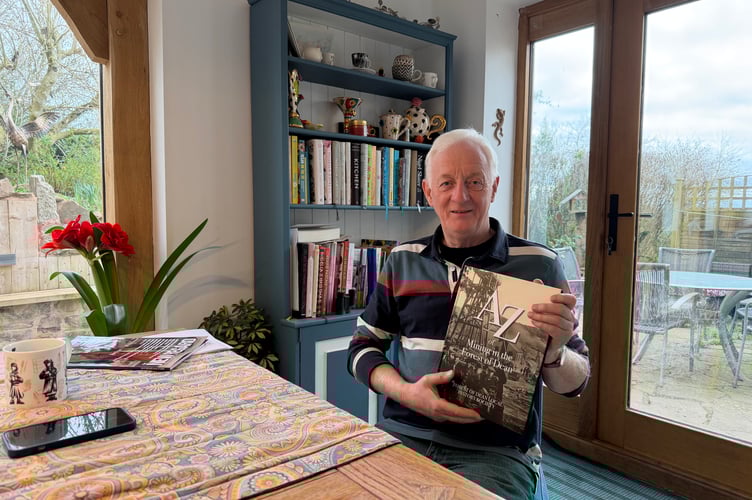
To learn more about this subject, I spoke with Nigel Costley, a member of the Forest of Dean Local History Society and editor of The New Regard, a magazine published in connection with the organisation.
Nigel Costley said: “I think the Forest is fortunate as a rural area that it’s so rich in its history because of its turbulent past, that the identity of Foresters has been shaped, particularly by mining. Its corner of England shaped by the rivers, isolated. Its people are a bit truculent, stubborn and have not been pushed over easily by outside interests - and there’s a pride in that spirit, which comes across in its history.”
The spirit of this mining culture and tradition has been explored in a recently published book entitled “A-Z of mining in the Forest of Dean”. With over 25 years of research by Dave Tuffley, the Forest of Dean Local History Society helped turn a glossary of knowledge into physical, visually pleasing literature.



As The Forest of Dean is renowned for its free mines and the history surrounding them, the book has a lot to offer residents who want to connect with their forester heritage.
Nigel said: “It may be fading out, but the language of the Forest has been shaped by mining, and the character of the Forest of Dean communities has been shaped by mining.
“We’re so pleased that we can offer something to the community that we can be proud of, but I think anyone who lives in the Forest and is proud of their mining tradition can also be proud of it.”
The book is ideal for any reader. It’s a book that you can dip in and out of, and offers a fascinating insight into the past. Indeed, as the Local History Society’s mission is to educate on matters of the Forest’s history, even school children can enjoy the subject matter.
Nigel said: “We would like young people to understand their history and the Forest’s legacy. I think children naturally aren’t as interested in history until they get older, but we’ve been really pleased with the level of interest. Seeing primary schools doing projects, getting to know their neighbourhoods, doing essays.”
Nigel added that a book such as this can help younger people better understand the identity of where they’re from.
However, everyone can benefit from learning more about the Forest’s mining history. From past terminology used to the standing remains of Forest of Dean free mines.
Nigel said: “I think the language and the traditions are just as important as the physical remnants of mining, which have been recorded but what’s left has fallen into dereliction and been built on. However, there are the physical aspects of mining all around us, you only have to walk around the Forest before you’re walking on a tramway or you come across some odd bits of stone.”
You can explore more of the Forest’s mining history, or order a copy of the new book, via The Forest of Dean Local History Society website.
Comments
We've recently changed our login process. If you have an account for commenting, you will need to re-register on the login window.
This article has no comments yet. Be the first to leave a comment.