

The Big Garden Birdwatch that takes place at the end of January each year has revealed a worrying decline in some of our much-loved garden birds due to a disease called trichomonosis, and demonstrates why such surveys are so important – so, well done if you took part. Trichomonosis is a highly contagious disease and therefore can be easily spread where birds gather in large numbers, such as at bird feeders.
Greenfinches have dropped by over 65 per cent in the last three decades. When the Big Garden Birdwatch started in 1979 Greenfinches were at number seven in the top ten birds recorded. This year they were down to number 18. Interestingly, Wood Pigeons were top of the list with Blackbirds second, Crows third and Magpies fourth. Starlings were fifth and it was only at number 6 that a proper little garden bird made the list – the Sparrow. Then the Black-headed Gull and feral Pigeon were in positions 7 and 8, with the Robin and Blue Tit being at 9 and 10 respectively. Now don’t get me wrong, I like all birds but I am (secretly) disappointed and concerned at the lack of ‘little’ garden birds in the top ten.
The RSPB are warning that we are currently experiencing huge declines in the UK’s Greenfinch and Chaffinch populations, and we may also be seeing a rapid decline in Bullfinches – all caused by trichomonosis. To help slow the disease the RSPB are asking that we ‘feed the birds seasonally’, which means pausing bird feeding from now until November. We can still feed birds as normal through the winter months as the disease is halted by cold weather.


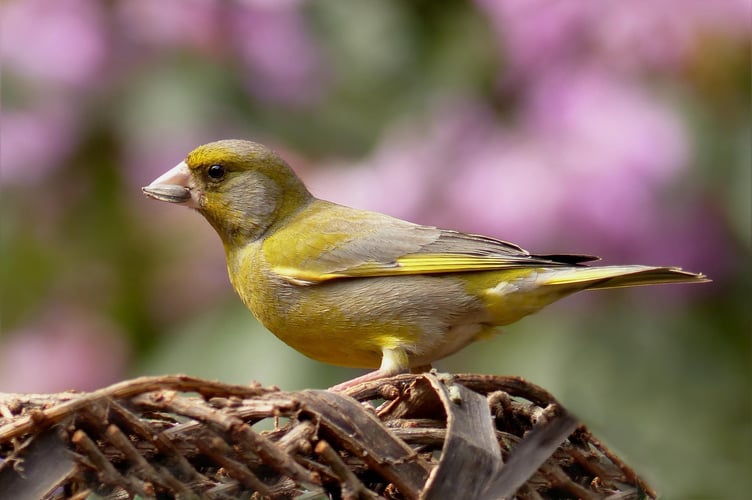
If you still want to watch the birds visit, then it is recommended to just put out small amounts of fat-balls and mealworms as finches aren’t keen on those but other birds will still benefit from a little help during the breeding season. Also please change their drinking and bathing water daily, where possible, to minimise disease.
From April onwards, there are more natural foods available to birds in our gardens, such as flower seeds and insects, and it is good to encourage birds to feed themselves naturally. Goldfinches, for example, love dandelion seed.
There are lots of ‘Feed the Bird’ mixes of annual seeds available that can be sown now – in gardens or containers, just remember wildflowers prefer poor soil to rich compost - to provide natural bird food later in the year. Mixes include annuals including Cosmos, Helianthus, poppies, and cornflowers and will add a splash of colour to your garden as well as much appreciated food for our feathered friends.
Millet is also easy to grow, with lots of different varieties, like `Purple Majesty’, to choose from. Millet is also much-loved by sparrows which will cling to the plants and peck out the seeds.
Setaria italica 'Red Jewel', has stunning crimson bottle brush ‘flowers’, and is one of the best garden bird food grasses you can grow. It also makes a fabulous cut flower and adds interest to flowerbeds and borders. It, and other varieties of millet, can be sown now for summer flowers followed by those all important seeds.
And of course don’t forget sunflowers. Choose from the dwarf, multi-headed ‘Teddy Bear’ variety to the giants – and aptly named – ‘Yellow Giant’ and lots in between.
Naturally grown seed ‘straight off the plant’ is so much healthier for birds too, as it still contains so much of the natural oils and good stuff. Remember that ‘we are what we eat’ (or in this case, ‘feed’), so don't be fast, cheap, easy, or fake.
Comments
This article has no comments yet. Be the first to leave a comment.