
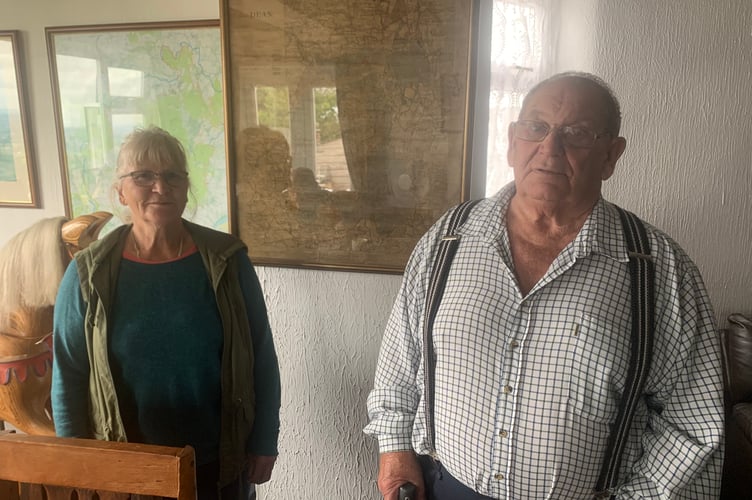
The Forest of Dean’s bid for Unesco biosphere status could win the backing of local commoners if their ancient rights are formally re-confirmed and a key sheep management group is re‑established.
Forest of Dean District Council is preparing an application for Unesco biosphere status, which would give international recognition to the area’s landscapes, wildlife and cultural heritage. However, concerns have been raised about a lack of public consultation and what the designation could mean for access and traditional land use.
The Forest of Dean Commoners’ Association, which represents people with historic rights to graze animals in the forest, has voiced particular concern about how the proposal might affect commoning.
General secretary Mick Holder said commoners would not accept any compromise to their rights.
“We, the commoners, are not prepared to compromise our rights in any shape or form in respect of money, goods or any other thing,” he said. “If it means we’ve got to compromise, we are not having it.”
Mr Holder said the association had held three meetings about the proposal so far and had asked the council for more information on how the biosphere application would affect them.
“The commoners’ right is a traditional right, it’s something we’ve had since birth,” he said. “It’s mentioned in the Charter of the Forest signed in 1217, giving us the right of pasture.
“Commoning is still very much alive in the Forest of Dean. It’s important that we don’t get any obstructions to commoning.”
He also called for the re‑establishment of the Sheep Liaison Group, a multi‑agency partnership which previously dealt with issues such as livestock welfare, road accidents and nuisance complaints.
“As an example, at Elton Corner on the A48, there is currently a carcass — we think a deer, but it might be sheep — and nobody wants to take responsibility,” he said.
Mr Holder said there was also a sheep scab outbreak in the area which would normally be addressed by the liaison group, and warned that future disease outbreaks could pose serious risks without coordinated management.
Forest of Dean District Council said commoning would be “one of the core practices celebrated” within a Unesco biosphere designation and would continue unchanged.
A spokesperson said biospheres focus on collaboration between people and place and are designed to recognise and protect traditional land uses such as commoning. They added that Unesco specifically asks about customary practices within applications.
The council said it hoped commoners would be represented in the proposed biosphere governance structure, including a stewardship assembly and delivery partnership, giving them influence over strategy, funding and priorities.
They said biosphere status could also benefit commoners by unlocking funding for habitat restoration, grazing infrastructure and support for future generations.
“While a biosphere cannot mandate participation, it gets its strength from local partnerships,” the spokesperson added. “The proposed governance model is designed so no one group has authority over another, but all have equal representation.”
Comments
This article has no comments yet. Be the first to leave a comment.