
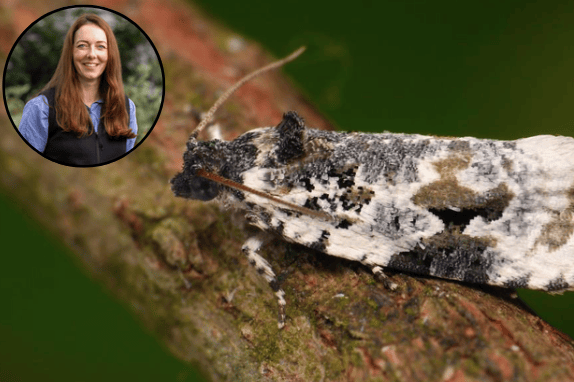
HARTPURY University has joined a major conservation project aimed at improving understanding of one of the country’s rarest moth species.
The university is working with Gloucestershire Wildlife Trust to investigate and protect the mistletoe marble moth, which is listed as a UK priority species.
Funding has been secured through Natural England’s Species Recovery Programme, part of a £60 million Government investment supporting threatened wildlife across England.
The moth is closely linked to mistletoe, although relatively little is currently known about its distribution or how quickly it colonises new areas.
Gloucestershire is considered an important UK stronghold for mistletoe, which is particularly associated with the county’s traditional orchards.
Hartpury specialists will study the distribution and colonisation rates of both the plant and moth within these habitats.
Traditional orchards also provide homes for numerous other species, including animals, fungi and organisms which depend on dead or decaying wood during their lifecycle.
They can support diverse populations of invertebrates, birds and mammals, meaning their protection could provide wider benefits for local biodiversity.
Dr Lucy Garrett, Research Lecturer in Biodiversity and Conservation at Hartpury, said the institution was delighted to support the project.
She said: “There is still a great deal we don’t know about this species, including how it colonises new areas and how its distribution relates to mistletoe and the traditional orchard habitats where both can be found.


“By improving our understanding of these relationships, we can help build the evidence needed to support effective conservation.”
The national Species Recovery Programme is funding 130 projects targeting 364 threatened plants, animals and fungi over three years.
Hartpury students will also have opportunities to participate in practical conservation research, connecting classroom learning with fieldwork.
They could gain experience in species monitoring, habitat assessment, data collection and biodiversity conservation, while learning how scientific evidence informs decisions about protecting threatened wildlife and managing important habitats locally.
Comments
We've recently changed our login process. If you have an account for commenting, you will need to re-register on the login window.
This article has no comments yet. Be the first to leave a comment.