
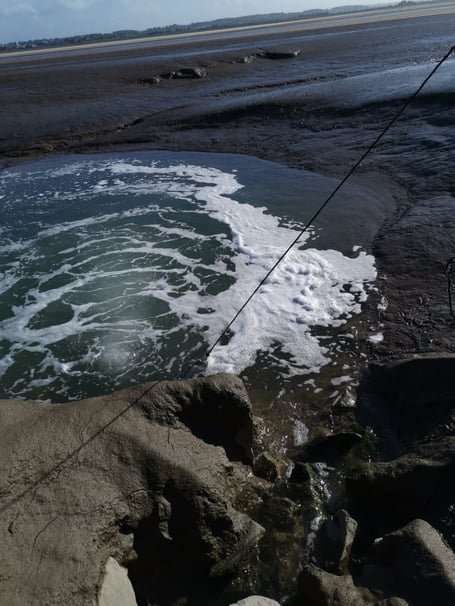
SEVERN Trent says it will look to complete actions to help improve the health of local rivers ahead of a 25-year Government target, but it could still take decades to reach "good ecological status".
And councillors say they are disappointed with the targets set by water companies to stop discharging raw sewage into local rivers completely.
Last week, county councillor Paul Hodgkinson (Lib Dem, Bourton-on-the-Water and Northleach) asked Severn Trent, Thames Water and Wessex Water, all of which cover areas of the Severn Vale, whether they had set a target date to stop pollution from making its way into the county’s watercourses.
He said it was good to hear from the firms but also very disappointing that two of them have no target at all to end all sewage discharges.



"In my view, the Government needs to step in with some seriously strong legislaton," Cllr Hodgkinson said.
Cllr Phil Awford (Con, Highnam), who chairs the scrutiny task group which is looking into river pollution, said he too was disappointed with Thames Water saying they are looking at a target date of 2050.
"It’s quite a long time away. We are going to have to suffer some discharges once we come into the wet season. If we don’t have these discharges, we are going to have flooding in the streets", he said.
"We are just not doing enough with grey water harvesting and new builds."
Increased scrutiny on water companies follows proposed amendments to the Environment Bill to place legal duties on the firms to reduce sewage discharges into rivers from storm overflows.
Severn Trent says it will aim to complete a "to do list" given to all sectors that impact water quality within a nine year time frame by 2030, 16 years ahead of the Government target outlined in the Environment Bill.
A spokesperson for the company said they are passionate about taking care of the environment and their rivers are currently the healthiest they have been since the industrial revolution.
They said that farming practices and land management are the biggest contributors to river pollution.
"Our commitment to thriving nature and our environment means that we have consistently supported both the Government’s Environmental Bill and the Duke of Wellington proposed amendment to it", the spokesperson said.
"The Environmental Bill outlines a to do list for all sectors that impact on river quality over a 25-year period.
"Assuming everyone, across all sectors successfully delivers the work on their to do list, rivers will reach ecologically good status.
"We’re committing to complete our actions in a 9-year time frame by 2030, rather than the 25-year target.
"The current debate is around the use of storm overflows which are used in heavy rain and are made up of almost all rainwater and only account for 3.5% of rivers not achieving good ecological status.
"We are working hard to use overflows less and we are investing £100m a year to go even further in improving rivers so that nature can continue to thrive.
"Across Gloucestershire agriculture and land management are the biggest contributors to rivers and other water courses not achieving good ecological status.
"Agriculture accounts for 36% of all river pollutions, so although we aren’t responsible for their actions, we want to take a leading role in helping farmers to care for rivers, which is why we are working with 9,000 farmers to prevent pesticides and other run off that harm nature reaching our rivers."
Comments
This article has no comments yet. Be the first to leave a comment.