
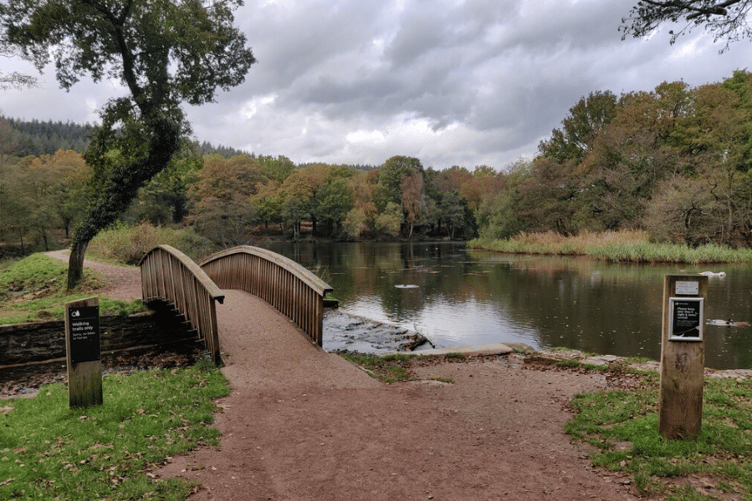
CANNOP Ponds have become one of the most recognisable beauty spots in the Forest of Dean, attracting generations of walkers, anglers, cyclists and families to the water's edge.
Surrounded by woodland in the Cannop Valley, the Upper and Lower Ponds can appear to be a natural feature of the Forest landscape, but their origins lie in the area's industrial past. Now, ageing infrastructure means Cannop is preparing for another major transformation, with Forestry England drawing up plans for a project expected to cost around £25 million.
The proposals are intended to secure the long-term safety of the reservoirs while creating new habitats and visitor facilities, but they have generated opposition from people concerned about how much the site could change. A new Save Cannop Ponds petition was launched last month calling for necessary repairs to be carried out without what campaigners see as unnecessary wider development.
The story of Cannop Ponds stretches back to the 1820s, when dams were constructed across Cannop Brook to provide water for a waterwheel at Parkend Ironworks. The landscape would have looked very different from the peaceful destination familiar today, with mining, quarrying, tramways and other industrial activity spread across the valley.
Over generations the ponds developed into an important recreational site and wildlife habitat. Fishing became particularly closely associated with Cannop, with Yorkley Angling Club holding a longstanding connection to the waters, while the ponds and surrounding woodland support a wide range of wildlife.
However, beneath their familiar appearance lies infrastructure which has required repeated attention. Forestry England says seepage through the Lower Cannop dam has caused holes or voids within the structure, with repairs carried out since the 1970s.
Concerns became apparent in February 2021 when a large void appeared beside the Lower Cannop spillway wall. An independent reservoir engineer subsequently identified significant voids underneath the spillway and these were filled with concrete, although Forestry England described the work as a repair rather than a permanent solution.
Both Cannop Ponds are reservoirs covered by the Reservoirs Act 1975 and together hold more than 100,000 cubic metres of water above surrounding ground level, equivalent to around 40 Olympic-sized swimming pools. They are classified by the Environment Agency as "high risk" reservoirs because of the potential consequences if a dam failed.
Another issue concerns the spillways, which allow excess water to pass through the dams during heavy rainfall. Assessments found the existing structures were not large enough to meet modern requirements for the extreme rainfall events engineers must consider when assessing reservoir safety.
If water overwhelmed a spillway and flowed across an earth dam, it could erode the structure and potentially lead to failure. It means that while there has been considerable debate about Cannop's future, leaving the ponds entirely untouched is not among the available options.




Forestry England presented four possible futures during public engagement in March 2023. These ranged from retaining the ponds with engineering improvements to a dramatic proposal which would have removed the existing spillways and returned Cannop Brook to a more natural valley landscape.
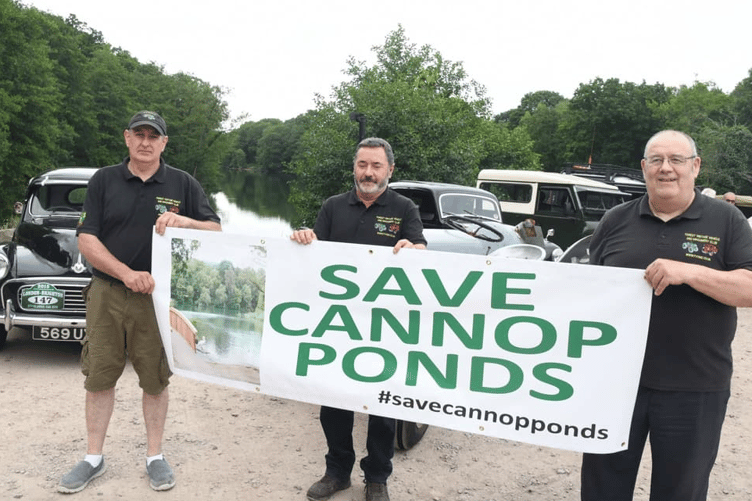
That possibility could have resulted in both ponds disappearing in their familiar form and sparked significant opposition. A Save Cannop Ponds campaign attracted support from people concerned about the potential loss of the lakes, with objections focusing on recreation, wildlife, fishing and their place in the Forest landscape.
Further modelling ultimately changed the options available. Flood risk results received in October 2023 indicated fully renaturalising Cannop Brook could potentially increase future flooding elsewhere and Forestry England had committed to a solution which would not worsen existing flood risk.
The renaturalisation option was discounted and Forestry England's executive board approved its preferred approach in January 2024, with the decision announced the following month. Work has since continued to develop the detailed proposals now being put before residents.
Under the latest plans, Lower Cannop would retain a large area of open water and remain the more familiar of the two ponds. Its dam would be strengthened, seepage addressed and the current spillway replaced by a larger structure capable of safely handling greater volumes of water.
Upper Cannop would undergo a more noticeable transformation, with its water level permanently lowered and the landscape altered to provide open water, marsh, reedbeds and wet woodland. Floating islands, meadows and grassland are also included in designs intended to increase habitats for wildlife.
Visitor improvements include an all-access trail, boardwalk, wildlife viewing platform, seating and a terraced picnic area. The Colliers Trail would be permanently moved away from road traffic, while interpretation would highlight features including the former Bixslade Tramway crossing, wharf and stone works.
Those wider changes have prompted a new campaign over Cannop's future. A second Save Cannop Ponds petition was launched by Shaun Bick on August 25, calling for Forestry England to carry out essential dam improvements while leaving the wider area largely unchanged.
Campaigners have expressed concerns that the proposals risk turning Cannop into what the petition describes as a "tourist trap". The latest disagreement differs from the earlier campaign, when one option raised the possibility of the ponds themselves effectively disappearing.
Forestry England's position is that major engineering work provides an opportunity to improve biodiversity, accessibility and the visitor experience while meeting reservoir safety obligations. The debate is therefore increasingly centred not on whether work should happen, but how much one of the Forest's best-known landscapes should change.
The construction process is expected to have a significant temporary impact. Current proposals would see Upper Cannop completely drawn down, exposing the pond bed and allowing accumulated silt to dry before some is reused in new wetlands and landscaping.
Fish would be removed from the Upper Pond, weighed and temporarily transferred to Lower Cannop before an equivalent weight of native fish was returned. Lower Cannop is not expected to be completely drained, although its water level would be reduced to provide safe working areas.
The wider Cannop site would close to visitors during construction, with the car park expected to become the main works compound. Forestry England intends to keep a diversion of the Colliers Trail available during the works, which are expected to take around two years.
At an estimated £25 million, Forestry England says the scheme would represent its largest financial investment to date. Public engagement events are due to take place at Speech House on September 24 and September 30, with online engagement continuing until October 25.
Feedback will help shape the proposals before Forestry England intends to submit a planning application in early 2027. Subject to planning permission and necessary environmental and reservoir safety approvals, construction is expected to begin in 2028.
Cannop Ponds are therefore approaching another significant chapter around two centuries after they were created. Built to power industry, they survived the decline of the ironworks and became a place valued instead for wildlife, recreation and the landscape which grew around them.
The engineering which created the ponds has ensured some degree of change is unavoidable, but the debate over the £25 million project shows how strongly Cannop remains valued across the Forest. As Forestry England prepares its final plans, the question facing residents is no longer whether the 200-year-old reservoirs have to change, but how much they should change to secure their future.
Comments
We've recently changed our login process. If you have an account for commenting, you will need to re-register on the login window.
This article has no comments yet. Be the first to leave a comment.