

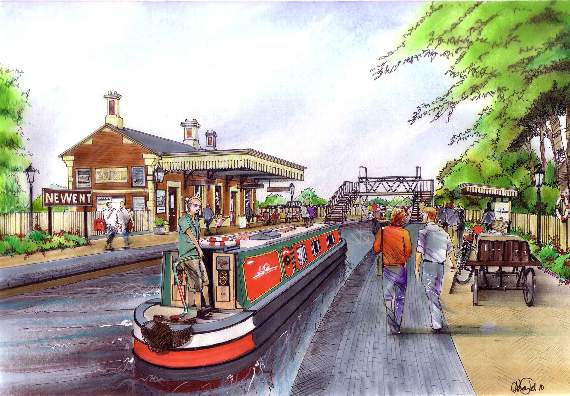
OFFICIALS from the Hereford and Canal Trust took part in a public meeting to address the concern Newent and Oxenhall residents had over the reinstallation of the waterway.
However the trust was accused of not consulting with the landowers over the length of the 34-mile canal.
Meeting chairman John Teire said: “There are a lot of strong feelings being shown here and even if a scheme is a decade or more away, the trust needs to talk to the landowners on the route of the canal just to open up a dialogue.”
Wilf Jones the trust's restoration co-ordinator and project leader said that it was a huge undertaking to restore the canal, of which the trust only own three miles.




He said: “The whole scheme is a large civil engineering project. We can only renovate small sections at a time, as and when we have the funding available.
“Much of what we do will require planning permission. The Newent section comes under the Forest of Dean District Council.”
John Hammond, the trust's treasurer and a member of the management team said: “We are using the skills of a highly experienced civil engineer to advise us as he led the restoration of the Dawlish Railway line when it was washed away in the storms.
“We have explored a lot of the issues debated here tonight, but in many instances like crossing roads and building completely new structures we have to follow the rules of other agencies and bodies.”
A spokesman for Forest of Dean District Council said: “Where the canal no longer exists in any form that can be restored or needs to follow a new route there are no permitted development rights available to the trust which would enable the creation of a canal and in such instances planning permission is required.
“The designation of an identified route in a Development Plan does not override the rights of the land owner and the canal trust has no powers to create or reform a canal without the consent of the relevant land owner.
“As with all planning matters, planning policy and planning permissions do not override individuals legal rights which are separate civil matters.”
Comments
This article has no comments yet. Be the first to leave a comment.