
THE FOREST of Dean’s biggest expansion for more than 200 years has been highlighted as an example of Britain’s changing approach to creating new woodland.
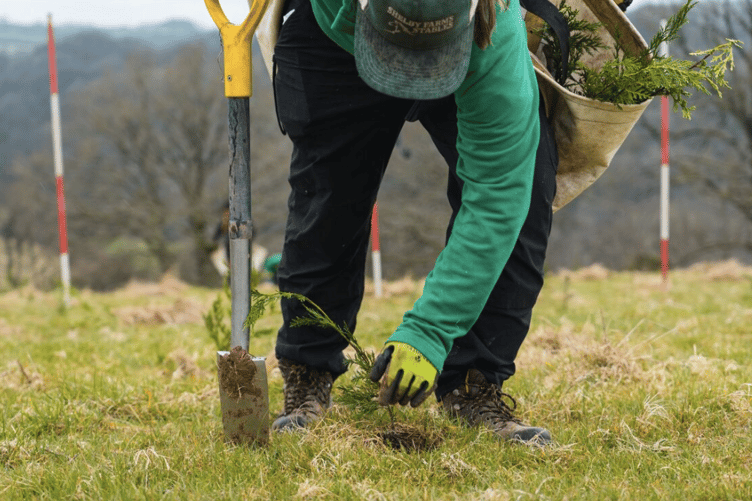
Around 127,000 saplings are now approaching the end of their first summer at Hoarthorns, an 88-hectare former farm between Berry Hill and Edge End.
The site, bought by Forestry England in December 2024, represents the first substantial addition to the Forest since the Crown purchased the High Meadow Estate in 1817.
Planting began last winter, with workers putting around 1,000 to 1,500 trees into the ground each day.
Almost 40 species have been planted, with broadleaf varieties including oak and alder forming much of the new woodland.
The varied approach marks a contrast with Forestry Commission planting during the 20th century, when large areas were planted with fast-growing conifers to increase Britain's timber supplies.
Forestry England says Hoarthorns will eventually connect with existing woodland at Ninewells, creating new habitats and helping wildlife move between established areas.
The woodland will also provide publicly accessible green space, capture carbon and eventually produce sustainable British timber.
Young trees are being protected from deer and the Forest’s wild boar population, which can cause significant damage through browsing before woodland becomes established.
The project comes amid a wider increase in woodland creation across Britain, with more than 13,000 hectares of new woodland created in the year to April 2026, although the UK remains among Europe’s least densely forested countries.

Forestry England has said the new woodland will be managed for nature, people and sustainable timber production, reflecting a broader shift towards creating forests which can serve several purposes rather than concentrating primarily on commercial forestry.
Hoarthorns has been funded through the Government’s Nature for Climate Fund and will remain under Forestry England management as the young trees gradually develop into the Forest of Dean’s newest woodland for future generations.
Comments
We've recently changed our login process. If you have an account for commenting, you will need to re-register on the login window.
This article has no comments yet. Be the first to leave a comment.